
Overnight Stops on a Road Trip: Campgrounds, Motels, and Everything Between
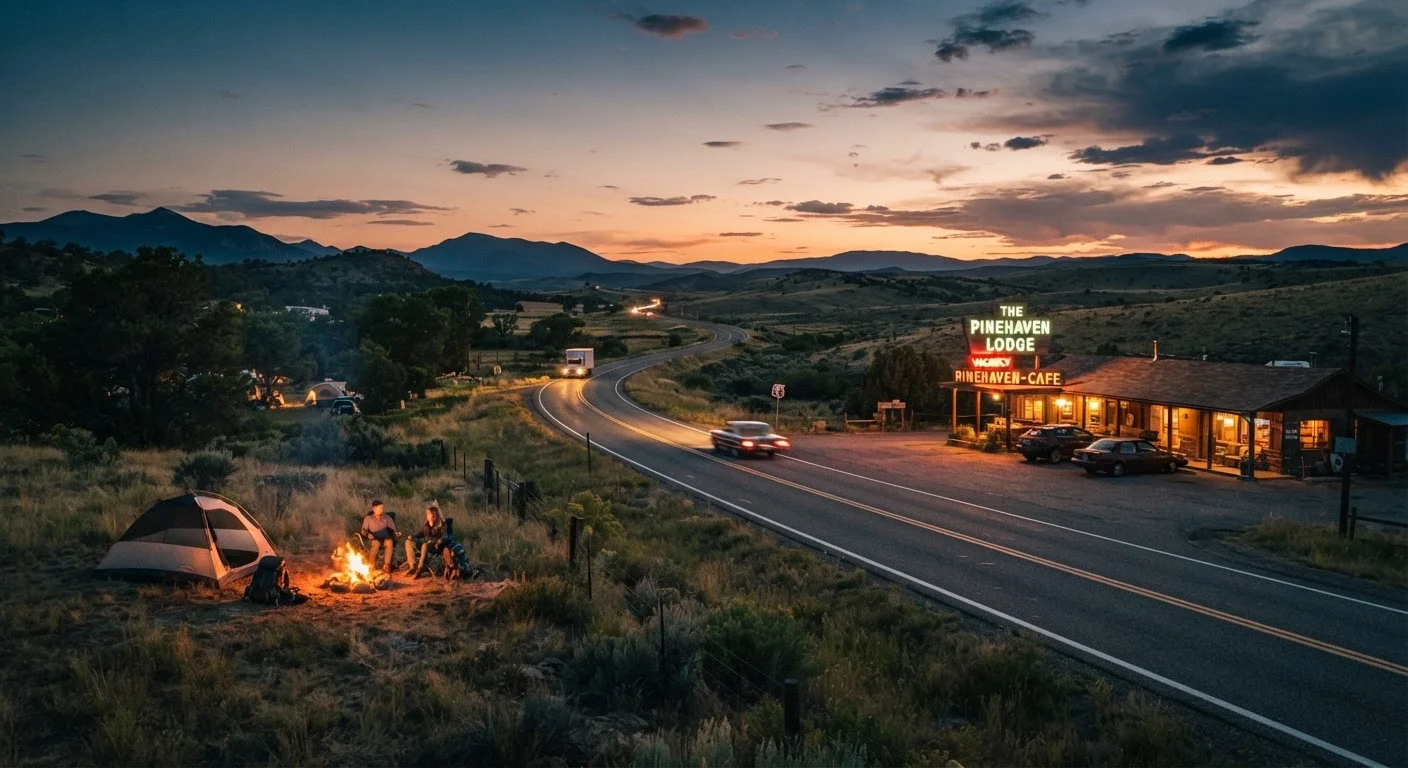
Photo credit: ExploreRoute.net | Travel Made Simple
In this article
A practical comparison of accommodation types suited to road travellers, including what each option demands in terms of planning and flexibility.
Key Takeaways
- Each overnight option — campground, motel, hostel, or vacation rental — suits different budgets, travel styles, and planning preferences.
- Campgrounds offer the most immersive outdoor experience but require advance booking in peak season and the right gear.
- Motels remain one of the most flexible no-reservation-needed options for spontaneous road trippers.
- Hostels and vacation rentals fill important niches for solo travelers and groups, respectively.
- Your route geography and travel pace should drive your lodging strategy just as much as cost does.
Why Your Overnight Strategy Matters as Much as Your Route
A road trip is only as good as the sleep you get between drives. Stumble into a town at 10 p.m. without a plan and you're gambling on availability, pricing, and comfort in ways that can derail the whole adventure. Get the lodging strategy right, and every morning feels like a fresh start.
The good news: road trippers have more overnight options than ever, from forest campgrounds and no-frills motels to quirky vacation rentals and social hostels. The challenge is knowing which type fits your particular trip. Mapping a route that balances driving time with meaningful stops is the first step — your overnight choice is the next.
| Campgrounds | Motels | Hostels | Vacation Rentals | |
|---|---|---|---|---|
| Typical cost range | Low–Moderate | Moderate | Low | Moderate–High (lower per person in groups) |
| Advance booking required | Often, especially peak season | Rarely | Recommended | Almost always |
| Gear or equipment needed | Yes — tent, sleeping bag, etc. | None | None | None |
| Best group size | Solo to small group | Solo or couple | Solo | Groups and families |
| Amenity level | Minimal to moderate | Basic to moderate | Basic shared facilities | High — kitchen, laundry, space |
| Spontaneity friendliness | Low to moderate | High | Moderate | Low |
| Immersive local character | Very high | Moderate | High (social) | High |
Campgrounds: The Full Immersion Option
For many road trippers, camping isn't just budget-friendly — it's the whole point. Waking up to birdsong at a national forest site or catching a meteor shower from a BLM dispersed campsite delivers an experience no motel room can replicate.
Public campgrounds managed by the National Park Service, U.S. Forest Service, and Bureau of Land Management range from primitive (no hookups, vault toilets) to full-service sites with electrical hookups, showers, and camp stores. Private campgrounds and KOA-style parks add amenities like Wi-Fi, pools, and playgrounds, bridging the gap between roughing it and comfort.
The planning catch: popular campgrounds in national parks and along scenic corridors book out months in advance during summer. Dispersed camping on certain public lands can offer a spontaneous alternative, but rules vary significantly by area and season. Always verify current fire restrictions and permit requirements with the managing agency before you set up. Glamping sits at the softer end of this spectrum if you want nature without sacrificing amenities.
Book Campgrounds Early for Peak Corridors
National park campgrounds along routes like the Pacific Coast Highway, Blue Ridge Parkway, and Grand Teton area routinely fill months in advance for summer weekends. If your road trip dates are fixed, lock in campground reservations as early as the booking window opens — typically six months ahead for federal sites. For more flexibility, identify nearby national forest or BLM alternatives as a backup, and always check current regulations with the managing agency directly.
Motels: The Road Tripper's Reliable Fallback
The American motel was essentially invented for the road tripper — drive-up access, exterior corridors, and a room key you can grab at 11 p.m. without navigating a lobby. That DNA hasn't changed much, and it's still a genuine advantage.
Independent motels along state highways tend to be the most flexible: no minimum stay, forgiving same-day booking policies, and parking right outside your door. Chain roadside properties add predictability in cleanliness standards and loyalty programs, though the character is more uniform. Either way, motels reward those who don't over-plan.
The trade-off is amenity depth. Expect a bed, a bathroom, cable TV, and maybe a small fridge — not much more. For road trippers who treat the room as a pit stop rather than a destination, that's a perfectly sensible exchange. Matching your trip type to the right hotel style can help if a standard motel feel isn't quite what you're after.
Hostels, Vacation Rentals, and the Middle Ground
Two categories fill the space between tent and motel room, each serving distinct traveler profiles.
Hostels — once considered the domain of backpackers overseas — have grown meaningfully in U.S. cities and gateway towns near popular parks. A dorm bunk costs a fraction of a private room and puts you in the same common area as other travelers sharing intel on routes, conditions, and hidden stops. Solo road trippers especially benefit from the social infrastructure.
Vacation rentals shift the calculus for groups and families. Splitting a three-bedroom house across six travelers often undercuts per-person motel costs while adding a kitchen, laundry, and living space that makes a two-night stay feel genuinely restorative rather than transactional. The planning burden is higher — most require advance booking and have stricter cancellation policies — but the payoff in comfort and space can be substantial.
For truly unconventional stays, it's worth exploring unique lodging options that turn accommodation into part of the adventure itself. And if terrain shapes your choice, matching landscape to lodging style offers practical guidance by environment.
55M+
Americans camp at least once per year
According to the Outdoor Foundation's annual Outdoor Participation Trends report, camping consistently ranks among the most popular outdoor activities in the U.S.
~40%
Road trippers who mix lodging types
Industry travel surveys have found that a significant share of multi-night road trippers combine at least two accommodation types on a single journey.
Building a Mixed-Lodging Strategy
The most seasoned road trippers rarely stick to a single overnight type for an entire trip. A practical approach: anchor two or three nights at a campground near a park or natural attraction, use motels for transition nights when you're covering distance, and drop into a vacation rental for any stay of three nights or more in a single location.
Your travel companions shape this calculus too. Solo and group road trips demand very different planning approaches, and lodging is where those differences show up most directly. A solo tripper can grab a hostel bunk or a single motel room at will; a family of five needs to plan a week ahead for comparable comfort.
A few durable principles: book campgrounds in high-traffic corridors early, keep at least one flexible night unbooked per week for detours, and always scout nearby alternatives before committing to remote locations. For lodging options tied to specific destination types, browsing by location is a useful starting point for research.

Author
Road Trip Culture Editorial Team
Road Trip Culture Editorial Team is the collective byline for our editorial team and contributor network. Articles published under this byline or an editorial pen name are researched, written, and reviewed according to our editorial standards for clarity, consistency, and independence before publication.
View all articles →