
River Crossings, Flash Floods, and White Space on the Map: Managing Wilderness Risk
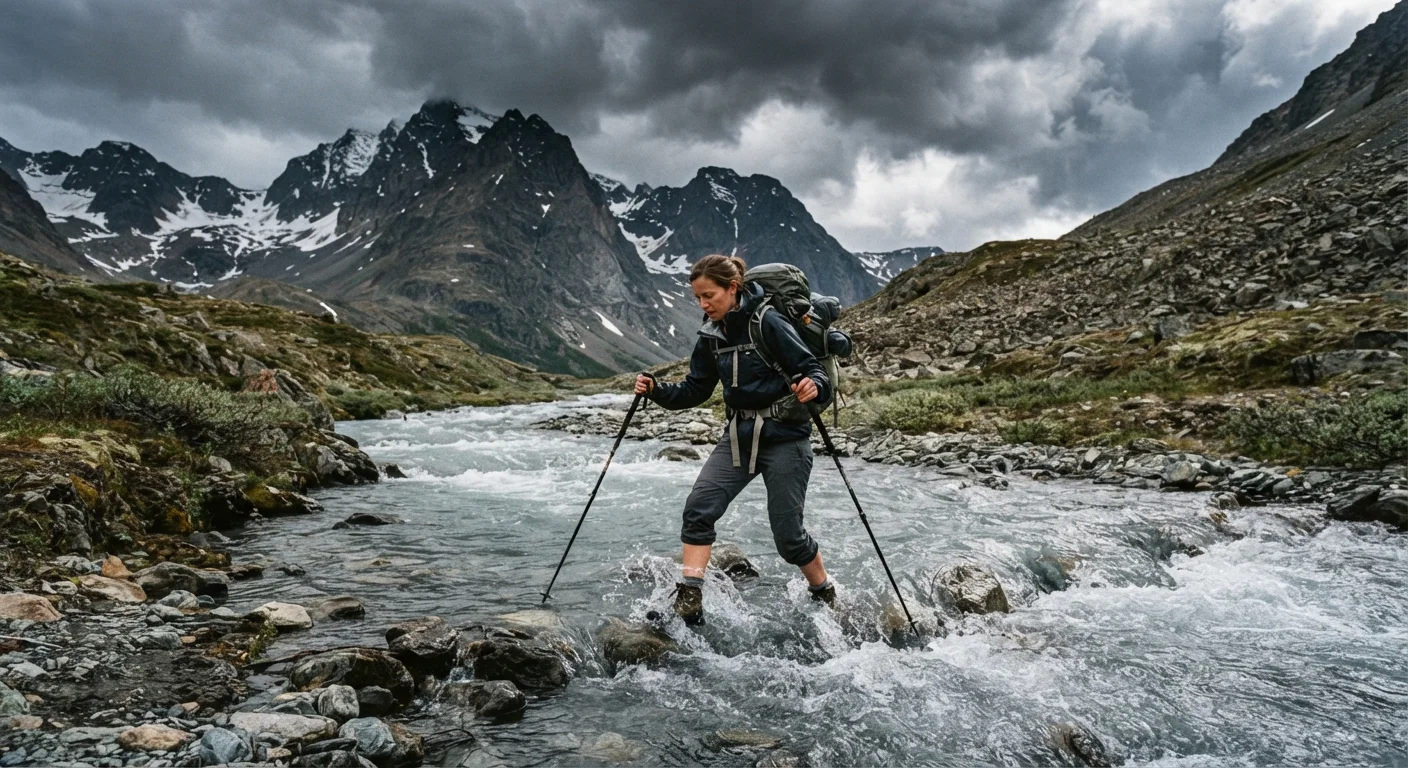
Photo credit: ExploreRoute.net | Travel Made Simple
In this article
Risk is inherent in adventure travel. This guide explains how experienced travelers identify, assess, and mitigate danger in remote environments.
Key Takeaways
- Risk in remote wilderness is manageable with deliberate assessment frameworks, not eliminated by courage alone.
- Flash floods and river crossings are among the most underestimated hazards in backcountry travel.
- Knowing when to turn back is the most critical decision any wilderness traveler will ever make.
- Effective risk management begins weeks before you leave, not when you're already in the field.
- Always file a detailed trip plan with a trusted contact before entering unmapped or remote terrain.
Why Wilderness Risk Is Different From Everyday Danger
In a city, risk is largely managed for you — traffic signals, emergency services, and infrastructure all sit between you and harm. In the backcountry, that buffer disappears entirely. When you step into genuinely remote terrain, the margin for error compresses, and the consequences of misjudgment scale sharply with your distance from help.
Experienced wilderness travelers don't operate without fear — they've learned to convert it into useful information. The sensation of unease before a river crossing or under a building storm isn't weakness; it's your nervous system doing pattern recognition. The practice of risk management is really the practice of listening to those signals, examining them clearly, and making decisions based on evidence rather than ego or sunk-cost pressure.
Understanding the terminology is a meaningful first step. Familiarizing yourself with terms like exposure, bail point, and crux helps you communicate clearly with partners and interpret route descriptions accurately before you commit to difficult terrain.
River Crossings: Slow Down Before You Step In
River crossings account for a disproportionate number of wilderness fatalities, particularly in glacially fed or monsoon-affected regions where flow volumes can change by mid-morning. The single most reliable rule: cross early in the day, before snowmelt peaks. A knee-deep ford at 7 a.m. can be waist-deep and dangerous by noon under clear summer skies.
Before entering, assess the hydraulics — not just the depth. Fast, shallow, boulder-strewn water is often safer than a smooth, deep channel that hides powerful laminar flow. Look for a wider, braided section where energy is dispersed. Unbuckle your hip belt before crossing so you can shed your pack if you go down. Poles provide a critical third point of contact; a trekking pole angled upstream can compensate for significant current force.
The Sunk-Cost Trap in the Backcountry
One of the most dangerous cognitive biases in wilderness travel is continuing a risky route because you've already invested time, money, or distance in reaching it. Experienced guides consistently identify this 'summit fever' dynamic as a leading contributor to accidents. Pre-committing to turn-around criteria before departure is the most reliable way to counteract it. The wilderness will be there on another trip — the consequences of pressing on often will not be reversible.
Those pursuing packrafting-style itineraries that combine river and ridge travel face a compounded version of this challenge. Packrafting demands a thorough understanding of whitewater dynamics layered on top of standard backcountry judgment — it is not a skill set acquired on the route itself.
Flash Floods and the Weather You Cannot See
Flash floods kill people who never saw the rain that caused them. A storm cell 15 miles upstream in a canyon system can send a wall of debris-laden water through a dry slot canyon with almost no warning. The hazard is not always visible from the site of greatest danger.
Before entering any canyon, narrow drainage, or dry riverbed, obtain a multi-day weather forecast for the entire upstream watershed — not just your immediate location. Talk to local rangers, who understand regional storm patterns in ways no app can replicate. Establish clear no-go criteria in advance: if there's any precipitation forecast in the upstream drainage, canyon travel is off.
~70%
Wilderness fatalities involving preventable decisions
Research published in wilderness medicine literature consistently finds the majority of backcountry deaths involve at least one decision point where a safer choice was available.
6–8 hrs
Average delay before distress signal activation
Studies of search-and-rescue incidents suggest survivors frequently wait hours before activating emergency signals, often compounding their situation.
Reading terrain for flood risk is a learnable skill. High-water marks on canyon walls, polished stone above head height, and debris lodged in vegetation at elevation are all evidence of previous flood events. Treat these indicators as data, not decoration. Learning to read terrain before departure is one of the highest-leverage investments a backcountry traveler can make.
Best Practices for Managing Remote Wilderness Risk
These practices reflect approaches used by experienced wilderness guides, search-and-rescue professionals, and expedition leaders across varied terrain types. They're most effective when treated as a system rather than a checklist — each reinforces the others.
File a detailed trip plan with a trusted contact before every remote outing.
Search-and-rescue operations are most effective when responders know where to look, what route was intended, and when to activate a search. A missing person with no filed plan dramatically increases rescue time and decreases survival odds.
Establish hard turn-around criteria before you leave the trailhead.
In-the-moment decision-making is distorted by fatigue, sunk cost, and group pressure. Pre-committed decision rules — if the water is above the knee, we do not cross — remove ego from the equation when stakes are highest.
Carry and know how to use navigation tools that don't depend on battery or signal.
GPS devices and smartphone apps fail in cold temperatures, after battery drain, and in areas with no satellite view. Relying solely on digital navigation in unmapped terrain is a single-point-of-failure approach.
Treat weather forecasts as minimum-warning inputs, not guaranteed predictions.
Mountain and canyon environments generate localized weather that regional forecasts often miss. Using a forecast as your only decision input can lead you to underestimate rapidly evolving conditions.
Always identify your bail-out options before committing to remote terrain.
Committing to a route without knowing your exit options forces you to continue even when conditions change — a dynamic that contributes to many serious backcountry accidents.
If you're preparing for your first extended time off marked trails, this foundational guide to remote wilderness travel covers navigation, gear, and leave-no-trace principles that complement the risk management practices above. Those drawn to landscapes that genuinely push the boundaries of the known should also explore wilderness areas that rarely appear on any map — with the understanding that unfamiliar terrain demands proportionally greater preparation.
Quick-Start Actions for Your Next Expedition
Sound risk management doesn't require years of field experience to begin. These immediate actions can meaningfully improve your safety posture before your next journey into remote terrain.
This article is for general informational purposes only and does not constitute professional safety, medical, or survival advice. Always consult qualified guides, rangers, and relevant authorities before undertaking remote wilderness travel, and verify all entry requirements, conditions, and emergency protocols with official sources before departure.

Author
Specialty Travel Editorial Team
Specialty Travel Editorial Team is the collective byline for our editorial team and contributor network. Articles published under this byline or an editorial pen name are researched, written, and reviewed according to our editorial standards for clarity, consistency, and independence before publication.
View all articles →