
The Complete Guide to Responsible Travel in Fragile Natural Ecosystems
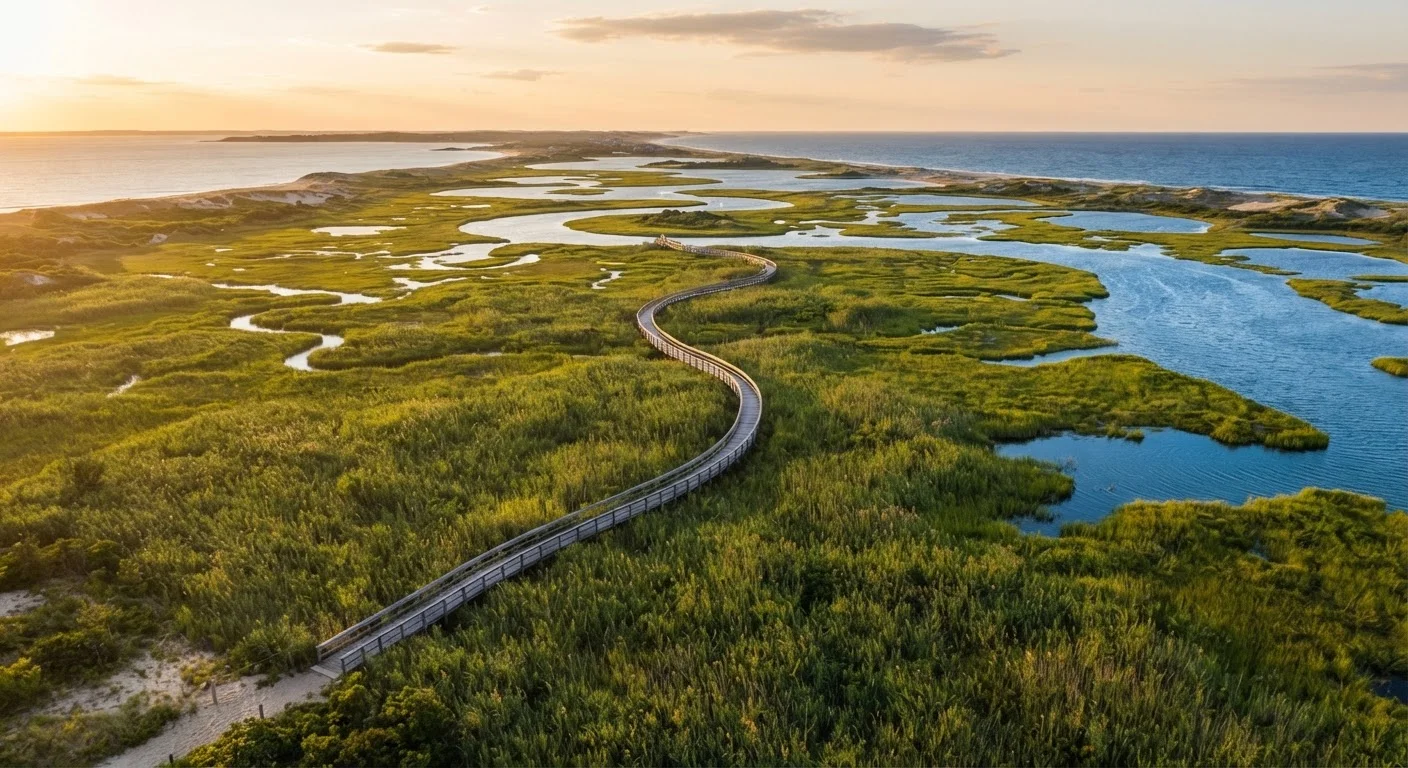
Photo credit: ExploreRoute.net | Travel Made Simple
In this article
Visiting rare and sensitive landscapes carries real responsibility. This end-to-end guide covers ethics, technique, and environmental awareness.
Key Takeaways
- Thorough pre-trip research protects both you and the ecosystem you plan to visit.
- Staying on established paths and avoiding physical contact with living organisms prevents irreversible damage.
- Standard Leave No Trace principles often need adaptation in extreme or remote environments.
- Supporting locally led conservation efforts multiplies the positive impact of your visit.
- Some conditions — weather, season, personal readiness — make postponing the right ethical choice.
Why Fragile Ecosystems Demand a Different Kind of Traveler
A salt flat that took ten thousand years to form can be scarred by a single tire track that persists for decades. A coral microhabitat colonized over centuries can bleach and die from the sunscreen in a swimmer's skin. These aren't hypothetical scenarios — they're documented realities at sites across the American Southwest, the Pacific, and beyond. Visiting a fragile natural ecosystem is a privilege that carries proportional responsibility.
The distinction between a fragile ecosystem and an ordinary scenic destination isn't always visible. Cryptobiotic soil crusts in canyon country look like ordinary dirt until you learn they are living communities of fungi, cyanobacteria, and mosses that fix nitrogen and anchor sand — and that a single footstep can fracture what took 50 to 250 years to develop. Sensitivity is often invisible, which is precisely why knowledge must precede arrival.
See which extraordinary landscapes are already under pressure from climate and visitor impact to understand the stakes involved before you plan your route.
Invisible Doesn't Mean Undamaged
Many of the most serious harms travelers cause in fragile ecosystems leave no immediate visible trace — compacted soil, disturbed microorganisms, introduced pathogens from touch. The absence of an obvious impact is not confirmation that none occurred. Assume every action has a consequence and default to the most cautious option available.
Research Before You Go: The Foundation of Responsible Access
Responsible travel in sensitive landscapes begins weeks or months before departure. Start by identifying whether the site is managed — national park, wilderness area, biosphere reserve, or Indigenous-protected territory — and what permits or entry quotas apply. Many of the most ecologically significant places now enforce strict visitor caps precisely because unmanaged access caused measurable harm.
Consult the managing agency's official website, not third-party guides, for current rules on camping, fires, waste disposal, and restricted zones. Regulations change seasonally and sometimes weekly in response to fire risk, wildlife breeding cycles, or storm damage. For sites with no formal management — remote backcountry areas, unmarked natural features — the pre-trip checklist for unmarked natural areas provides a structured framework for assessing your readiness.
Also invest time in understanding the specific ecology. Is the site home to nesting shorebirds in spring? Does it contain rare endemic plants that grow nowhere else on Earth? Does it lie within a watershed feeding downstream communities? This context shapes every decision you make on the ground. For a comprehensive approach to destination research from concept through final itinerary, the complete trip research guide covers verification across every phase.
50–250 yrs
Time to form cryptobiotic soil crust
Research from the U.S. Geological Survey indicates these living soil communities in desert ecosystems can take centuries to develop and are destroyed by a single footstep.
~10%
Of Earth's land under strict protection
According to the UN Environment Programme's Protected Planet report, roughly 10% of terrestrial areas carry formal protection status, yet pressures from visitation and climate change continue to grow.
1 in 3
Protected areas facing high human pressure
A study published in Science (2019) found that nearly one-third of the world's protected land experiences intense human pressure from agriculture, settlement, or tourism.
On the Ground: Movement, Contact, and Conduct
Once you arrive, your most consequential decisions involve where you place your feet and what you touch. Walk single-file on established trails where they exist. Where they don't — as in some desert or alpine environments — disperse your footfall across durable surfaces like rock, gravel, or dry grass rather than concentrating impact on a single improvised path that can quickly become permanent erosion.
Physical contact with living organisms almost always causes harm. Touching tide-pool creatures stresses them and can introduce pathogens; sitting on coral — even briefly — kills the polyps beneath you; picking up feathers, shells, or stones removes material from the nutrient cycles that sustain the ecosystem. The rule of thumb in virtually every protected area is: observe, photograph, move on.
Before entering any backcountry ecosystem, clean the soles of your boots with a stiff brush — not just to remove mud, but to dislodge seeds. Invasive plants have colonized entire valleys via seeds carried on a single pair of trail shoes.
Invasive species introduction is one of the leading threats to endemic biodiversity in fragile ecosystems, and boot treads are a well-documented vector.
If you're photographing wildlife, set a personal rule: if the animal looks at you, you're already too close. Back away slowly and give it space before it changes behavior.
Behavioral disturbance — including altered movement and feeding patterns triggered by human proximity — is documented as a stressor that reduces wildlife survival and reproductive success.
Wildlife proximity deserves particular attention. In fragile ecosystems, animals that habituate to human presence change their behavior in ways that reduce their survival rates — altered feeding patterns, abandoned nests, increased stress hormones. Maintain greater distance than feels necessary, use binoculars or a telephoto lens, and retreat if an animal acknowledges your presence. For those exploring sensitive terrain by vehicle, the road trip guide to national parks and reserves covers safe wildlife protocols in protected land.
Leave No Trace — and Then Some
The seven Leave No Trace principles — plan ahead, travel on durable surfaces, dispose of waste properly, leave what you find, minimize campfire impact, respect wildlife, and be considerate of other visitors — form a sound ethical baseline. But in truly extreme environments, those principles need meaningful adaptation. Glacial terrain, desert canyons, high-altitude tundra, and old-growth forest each present conditions the standard framework doesn't fully anticipate.
Human waste disposal illustrates this well. In most backcountry settings, a cathole six to eight inches deep buried 200 feet from water is adequate. But in alpine environments above tree line, organic matter decomposes far more slowly; in some cases, packing out all waste is the only responsible option. Similarly, soap — even biodegradable soap — should never enter standing water in any ecosystem; carry water 200 feet from the source and wash there. Read how ethical practices shift in truly remote terrain for environment-specific guidance.
The unintentional harms visitors cause — trampling cryptobiotic soil, introducing invasive seeds via dirty boot treads, disturbing thermal features — are explored in depth in how travelers accidentally damage the places they love most. Cleaning gear thoroughly before and after each visit is one of the most overlooked protective measures.
Biodegradable Doesn't Mean Harmless in Water
"Biodegradable" soap, shampoo, and sunscreen are designed to break down in soil — not in water. Introducing even small amounts into streams, lakes, or coastal tide pools can disrupt pH, harm microorganisms, and affect aquatic species. Always carry and use water at least 200 feet from any natural water source.
Supporting Local Stewardship and Community
Responsible travel extends beyond personal conduct into economic and social relationship. In many of the world's most ecologically sensitive places, local and Indigenous communities are the primary stewards — holding traditional ecological knowledge, managing access, and bearing the direct consequences of both degradation and conservation. Engaging with these communities through their own channels, rather than bypassing them in favor of external operators, keeps economic benefit where it belongs and honors established governance.
Look for visitor fees or voluntary conservation contributions managed by the local authority or community organization — not third-party platforms. Ask whether guided access is available through community-run programs; local guides typically provide ecological interpretation that no external resource can replicate, and their livelihoods are directly tied to the site's continued health.
Archaeologically and historically significant fragile landscapes carry an additional layer of ethical consideration. The guide to visiting a forgotten ruin responsibly addresses how to engage with off-radar cultural sites in ways that respect both the physical record and the communities connected to it.
Ask Before You Book
Before confirming any guided experience in a sensitive ecosystem, ask the operator directly: what percentage of your fee stays in the local community, and does the site's managing authority endorse your operation? Legitimate community-aligned operators will answer these questions readily. If an operator is evasive, that itself tells you something important.
When Not to Go: Honest Self-Assessment
Perhaps the most underrated dimension of responsible travel is knowing when your presence would cause more harm than good — and choosing not to go. Seasonal closure windows exist because nesting, breeding, and post-fire recovery all require freedom from human disturbance. Visiting a restricted zone because the season «technically» hasn't started yet, or because a trail closure sign looked unofficial, negates every other precaution you've taken.
Personal readiness matters equally. Remote fragile terrain demands physical fitness, navigational competence, appropriate gear, and the judgment to recognize when conditions have shifted beyond your capability. Ill-prepared visitors who require rescue don't just risk their own safety — they draw emergency resources into sensitive ecosystems and sometimes cause additional damage during extraction.
Ask yourself honestly: Am I physically capable of completing this trip without shortcuts that would damage the environment? Do I understand the specific regulations that apply? Am I prepared to turn back if conditions change? If the answer to any of these is uncertain, use that uncertainty productively — research more, train more, or plan for a future visit when you're genuinely ready. The landscape will be more valuable for your patience.
This article provides general educational guidance on responsible travel practices. Regulations, conditions, and access rules vary by site and change over time — always verify current requirements with the managing authority before your visit. For remote or unmarked terrain, consult local experts and official sources regarding safety, entry requirements, and any applicable laws.

Author
Hidden Destinations Editorial Team
Hidden Destinations Editorial Team is the collective byline for our editorial team and contributor network. Articles published under this byline or an editorial pen name are researched, written, and reviewed according to our editorial standards for clarity, consistency, and independence before publication.
View all articles →