
Staying Near Historic Sites: Proximity, Access, and What the Maps Don't Show
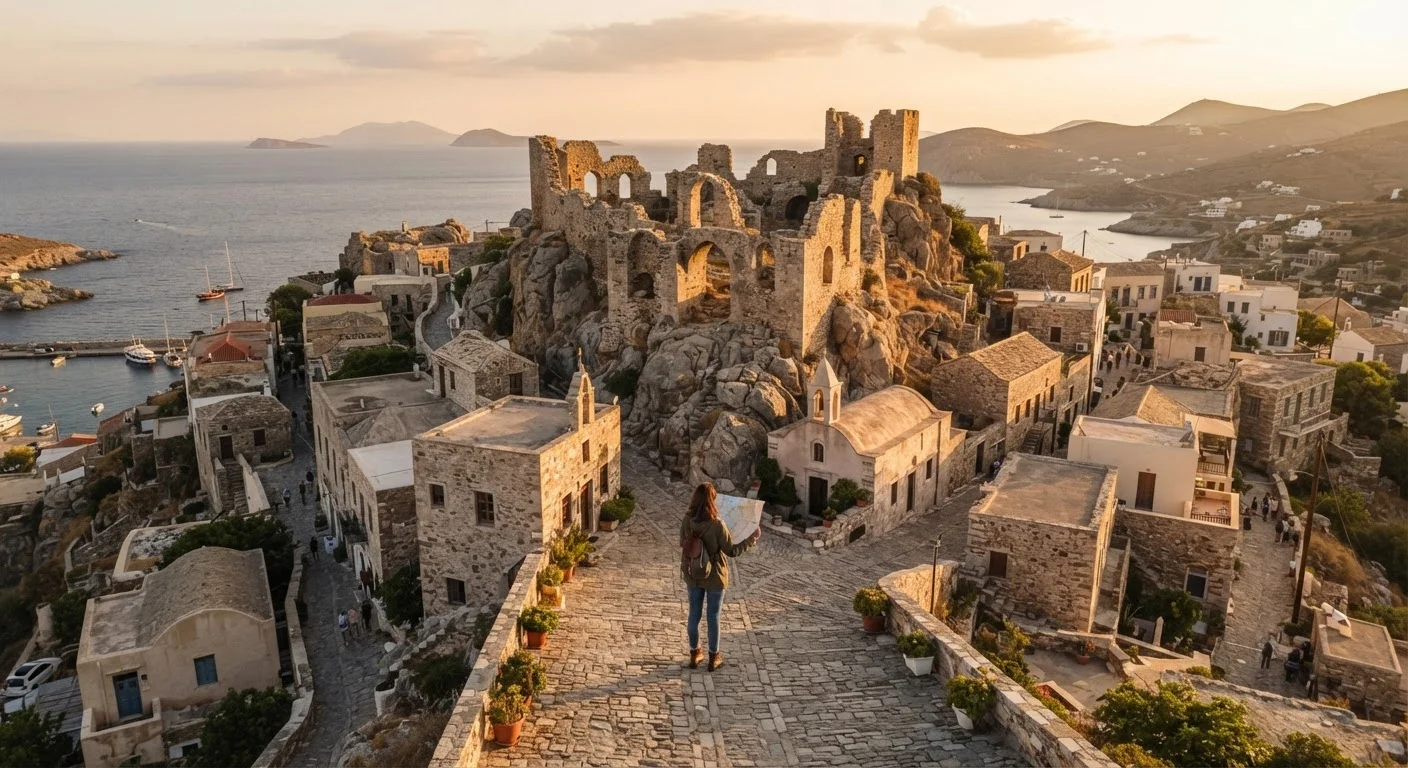
Photo credit: ExploreRoute.net | Travel Made Simple
In this article
Hotels closest to heritage attractions aren't always the most practical. A guide to thinking through access, crowds, and context.
Key Takeaways
- The closest hotel to a heritage site is not always the most practical or rewarding base.
- Crowd patterns, site hours, and local transport infrastructure matter as much as raw distance.
- Staying slightly further away often means quieter surroundings, better value, and richer local context.
- Buffer zones, preservation rules, and ticketing logistics can make on-site proximity irrelevant.
- Understanding a site's geography before booking prevents mismatched expectations at arrival.
Why the Nearest Pin Misleads
Mapping tools are excellent at measuring straight-line distance. They are considerably less useful at explaining what lies between your hotel and a heritage site — a pedestrian-hostile highway, a ticketed entry queue that starts forming before dawn, or a preservation buffer that physically prevents buildings from operating within half a kilometer of a protected monument.
Frequent heritage travelers know that the pin on the map marking a ruin or historic complex rarely captures the lived experience of reaching it. A property listed as "0.3 miles from the site" may require a 25-minute bus transfer because the intervening terrain is an archaeological exclusion zone. Conversely, a hotel two miles out might sit on a direct shuttle route that delivers guests to the gate before independent visitors have parked.
This gap between cartographic proximity and practical access is the first thing worth interrogating when booking near any heritage destination. As our editors explore in our guide to urban hotel geography, the district surrounding any accommodation shapes a trip far more than room amenities alone.
Reading the Site Before Reading the Reviews
Every significant heritage site has a management structure — often a national trust, UNESCO body, municipal authority, or combination of all three. These organizations publish access documents, conservation zone maps, and visitor management plans that most travelers never consult. These documents answer questions that no hotel review will: Is there a timed-entry ticketing system? Are morning slots sold out weeks in advance? Does the site close entirely during conservation periods?
Check Official Site Management Resources
Most UNESCO-listed and nationally protected heritage sites publish visitor management documents on their official websites or through the managing authority. These often include zone maps, ticketing procedures, and seasonal access restrictions that don't appear on general travel platforms. Consulting these before booking can prevent significant logistical mismatches. Always verify current conditions directly with the managing body before traveling, as policies change.
Understanding access logistics also shapes which accommodation characteristics matter most. A site that opens at 6 a.m. and draws its largest crowds by 9 a.m. rewards travelers who can walk to the gate — not those relying on a shuttle that starts at 8:30. A site only reachable by a twice-daily ferry makes on-shore proximity largely irrelevant.
For travelers venturing to less-visited destinations, a field-ready reference for independent heritage travelers can clarify site categories and access frameworks that aren't intuitive from standard travel research.
The Case for the Second Ring
Properties located in what might be called the "second ring" — close enough for easy access, but beyond the immediate tourist infrastructure surrounding a major site — tend to offer a specific set of practical advantages that closer options cannot match.
Map the actual approach route, not just the distance
Straight-line distance between a hotel and a heritage site frequently misrepresents travel time due to exclusion zones, terrain, or missing pedestrian infrastructure. Understanding the real route — and how you will traverse it — prevents arrival-day frustration and wasted time.
Align your accommodation location with site opening hours
Many heritage sites reward early arrival, either because crowds build quickly or because morning light dramatically improves the experience. Staying within walkable distance only provides an advantage if you can realistically arrive at or before the site opens.
Consider the noise and activity footprint of the site itself
Heritage sites that host evening events, light installations, or large tour groups generate ambient disruption that extends well beyond their boundaries. Properties immediately adjacent may offer dramatic views but inconsistent conditions for rest.
Research local transport links independently of hotel marketing
Properties advertise proximity, not journey quality. Local bus routes, tuk-tuk networks, or seasonal shuttle services sometimes make a more distant property faster and less stressful to travel from than a nominally closer competitor.
Staying in adjacent towns or residential neighborhoods also tends to expose travelers to the working community around a heritage site, rather than the visitor-facing economy built on top of it. That distinction matters for those seeking a more grounded sense of place. The case for early-adopter heritage travel explores how reduced visitor density consistently deepens the quality of on-site encounters.
Noise, Light, and the Overnight Experience
Hotels immediately adjacent to high-traffic heritage sites often experience conditions that maps and reviews underreport: early-morning tour bus arrivals, commercial lighting rigs used for evening events at monuments, and the ambient noise of a site preparing for daily operations. These are not dealbreakers for every traveler, but they are worth anticipating.
Ask About Ambient Conditions Before Booking
When reviewing properties close to major heritage attractions, search specifically for mentions of early morning noise, event lighting, and tour group activity in guest reviews — these details surface far more reliably in user-generated content than in official property descriptions. Contacting the property directly to ask about neighboring site operations is a reasonable and underused pre-booking step.
For travelers who prioritize the historic property experience itself — staying in a converted monastery, a heritage-listed inn, or a structure that predates modern tourism — these buildings are rarely located at the footstep of a major attraction. They tend to occupy their own historic districts or rural settings. Historic hotels that predate the tourism industry offer a form of context no modern build adjacent to a monument can replicate.
For travelers drawn to genuinely unconventional accommodation near water-adjacent heritage sites, heritage vessels as hotels represent another category where location logic differs entirely from land-based stays.
Putting It Into Practice
Applying these principles doesn't require exhaustive research — it requires asking a different set of questions earlier in the planning process. Before filtering accommodation by distance, establish how the site actually functions: its entry system, peak hours, approach routes, and any seasonal closures. Then match those logistics to the type of experience you want.
Travelers exploring more remote or understudied destinations should also consider how access infrastructure — or its absence — changes the equation entirely. Weighing remote access against easy infrastructure is a separate calculus that applies whenever a site sits far from established tourist routes.
The map is a starting point, not a conclusion. Proximity is one variable in a more complex equation — and for heritage travel in particular, it's rarely the most decisive one.

Author
Where to Stay Editorial Team
Where to Stay Editorial Team is the collective byline for our editorial team and contributor network. Articles published under this byline or an editorial pen name are researched, written, and reviewed according to our editorial standards for clarity, consistency, and independence before publication.
View all articles →