
How Adaptive Reuse Turns Forgotten Buildings Into Remarkable Places to Sleep
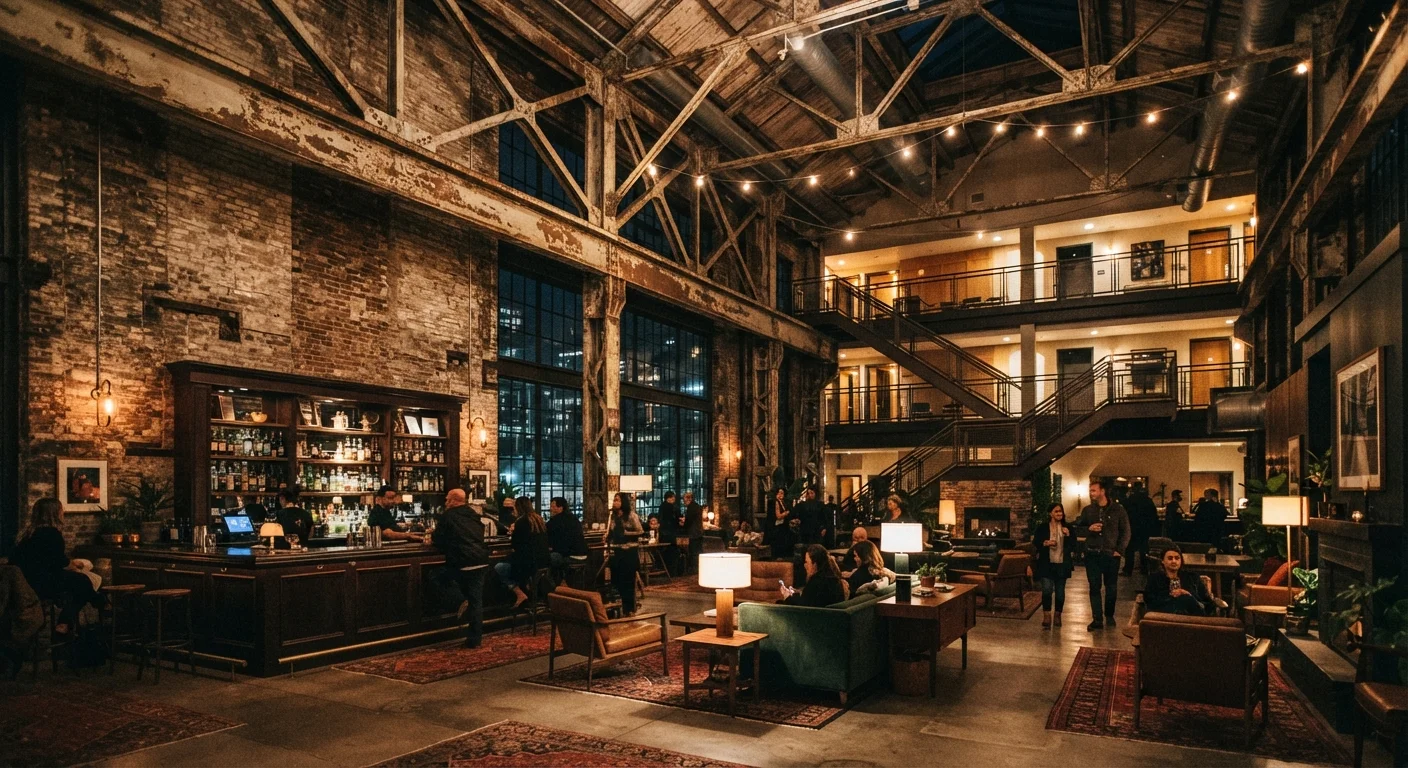
Photo credit: ExploreRoute.net | Travel Made Simple
In this article
Prisons, water towers, grain silos, churches — explore how adaptive reuse transforms derelict structures into one-of-a-kind stays.
Key Takeaways
- Adaptive reuse transforms buildings like prisons, silos, and churches into functioning hotels without erasing their original character.
- Staying in a converted structure offers an immersive connection to local history that purpose-built hotels cannot replicate.
- These properties often face unique design challenges — irregular layouts, limited natural light, structural constraints — that shape the guest experience.
- Adaptive reuse projects can serve as anchors for neighborhood revitalization in cities and rural areas alike.
- Accessibility and modern comfort vary widely across conversion projects; always research specifics before booking.
Why Travelers Are Drawn to Converted Structures
There is something fundamentally different about sleeping inside a building that once held a completely other purpose. A cell block turned guest room, a grain silo converted into a circular suite, a nave stripped of its pews and fitted with beds — these spaces carry a residual weight that modern construction simply cannot manufacture. For frequent travelers already fluent in the grammar of standard hotels, adaptive reuse properties offer a genuinely different kind of encounter.
The appeal is partly aesthetic. Industrial bones — raw concrete, timber trusses, oversized windows designed for factory floors — create spatial drama that architects actively seek to preserve rather than conceal. But the draw is also historical. When a building's past life is legible in its walls and layout, guests become participants in that history rather than passive observers of it.
The complete guide to unique stays offers broader context for travelers exploring the full range of unconventional lodging — adaptive reuse sits within that spectrum as one of the more intellectually rich options.
“The most resonant buildings are those that carry evidence of many lives — the marks of use, repair, and time. When hospitality designers work with that grain rather than against it, they create spaces that feel genuinely irreplaceable.”
— Kenneth Frampton, Architectural historian and author of 'Modern Architecture: A Critical History'
The Architecture of Conversion: What Makes It Work
Not every abandoned building becomes a successful hotel. The projects that work tend to share a few characteristics: structural integrity that reduces remediation cost, floor-to-ceiling heights that accommodate modern room configurations, and a building identity strong enough to function as a narrative — something guests can understand and engage with.
Silos present one of the most striking examples. Their cylindrical forms create rooms with curved walls and, in tall structures, dramatic vertical light shafts. Churches offer vaulted volumes and stained glass that require almost no theatrical augmentation. Former prisons, counterintuitively, attract significant interest: the experience of occupying a cell — now with a bed, a window, and Wi-Fi — is both unsettling and oddly compelling for travelers who seek that kind of friction in their experience.
The design challenge in most conversions is reconciling two competing demands: preserving the authentic character of the original structure while meeting contemporary expectations for comfort, safety, and accessibility. Successful projects treat these as creative constraints rather than obstacles. Historic hotels in pre-tourism-era buildings face a related tension — and the best examples show how that balance can be struck elegantly.
40%
Embodied carbon saved vs. new construction
Research from the Carbon Leadership Forum suggests adaptive reuse projects can reduce embodied carbon by 40–50% compared to demolition and new construction, depending on materials and scope.
1 in 5
Travelers prioritizing unique accommodation
Industry research from Skift and similar hospitality analysts consistently finds that a growing minority of travelers — roughly one in five — cite distinctive or unusual accommodation as a primary trip-planning factor.
70+ years
Average age of buildings in adaptive reuse projects
According to the National Trust for Historic Preservation, most commercially viable adaptive reuse candidates in the U.S. are structures built before 1950 — giving them a minimum age of seven decades before conversion.
Beyond the Aesthetic: Adaptive Reuse and Place
The effects of a well-executed conversion extend beyond the building itself. When a derelict structure is given new life as a hotel, it frequently becomes a catalyst for surrounding development — drawing foot traffic, supporting local suppliers, and signaling that a neighborhood or town is worth visiting. This dynamic plays out in post-industrial cities, rural mill towns, and even remote agricultural regions where grain elevators and barns once defined the local economy.
For travelers, this connection to place is part of the value proposition. Staying in a converted building in a neighborhood undergoing renewal is a different experience from staying in a luxury tower in an established tourist district. The former offers proximity to the unpolished, the in-progress, the genuinely local — which is precisely what a growing segment of experienced travelers is seeking.
Those interested in this intersection of travel and heritage might also find value in visiting forgotten historic sites before they're widely discovered — an honest look at both the rewards and responsibilities of early-adopter heritage travel.
Research the Building's History Before Arrival
Many adaptive reuse hotels publish archival photographs, timelines, or interpretive materials about the building's original function. Reviewing these before your stay — rather than discovering them on a lobby placard — deepens the experience considerably. Some properties offer guided tours of original features; it's worth asking ahead whether these are available.
What to Expect — and What to Check Before You Go
Adaptive reuse hotels are not a uniform category. A converted lighthouse cottage and a repurposed Victorian asylum occupy the same conceptual space but deliver radically different experiences. Setting expectations requires actual research rather than assumption.
Room configurations in converted buildings are often irregular — a feature, not a flaw, but one worth knowing about. Soundproofing in industrial buildings with open floor plans can be inconsistent. Climate control in thick-walled stone structures may behave differently from what guests are accustomed to. Some properties lean into these quirks as part of their identity; others work hard to neutralize them.
Accessibility deserves particular attention. Original building layouts frequently predate modern codes, and retrofit solutions range from comprehensive to minimal. Travelers with specific mobility needs should contact properties directly and review guidance on unique stays and accessibility before committing. The experience of a conversion hotel at its best is memorable precisely because it is specific — and specificity cuts both ways.
For travelers drawn to buildings with genuine historical gravity, this category of stay belongs alongside treehouses, cave dwellings, and other unconventional options explored in the field guide to unconventional stays. What unites them is a refusal to be generic — and that, for the right traveler, is reason enough.
Frequently Asked Questions

Author
Where to Stay Editorial Team
Where to Stay Editorial Team is the collective byline for our editorial team and contributor network. Articles published under this byline or an editorial pen name are researched, written, and reviewed according to our editorial standards for clarity, consistency, and independence before publication.
View all articles →