
Rural Farmstay, Village Guesthouse, or Country Inn: Parsing the Differences
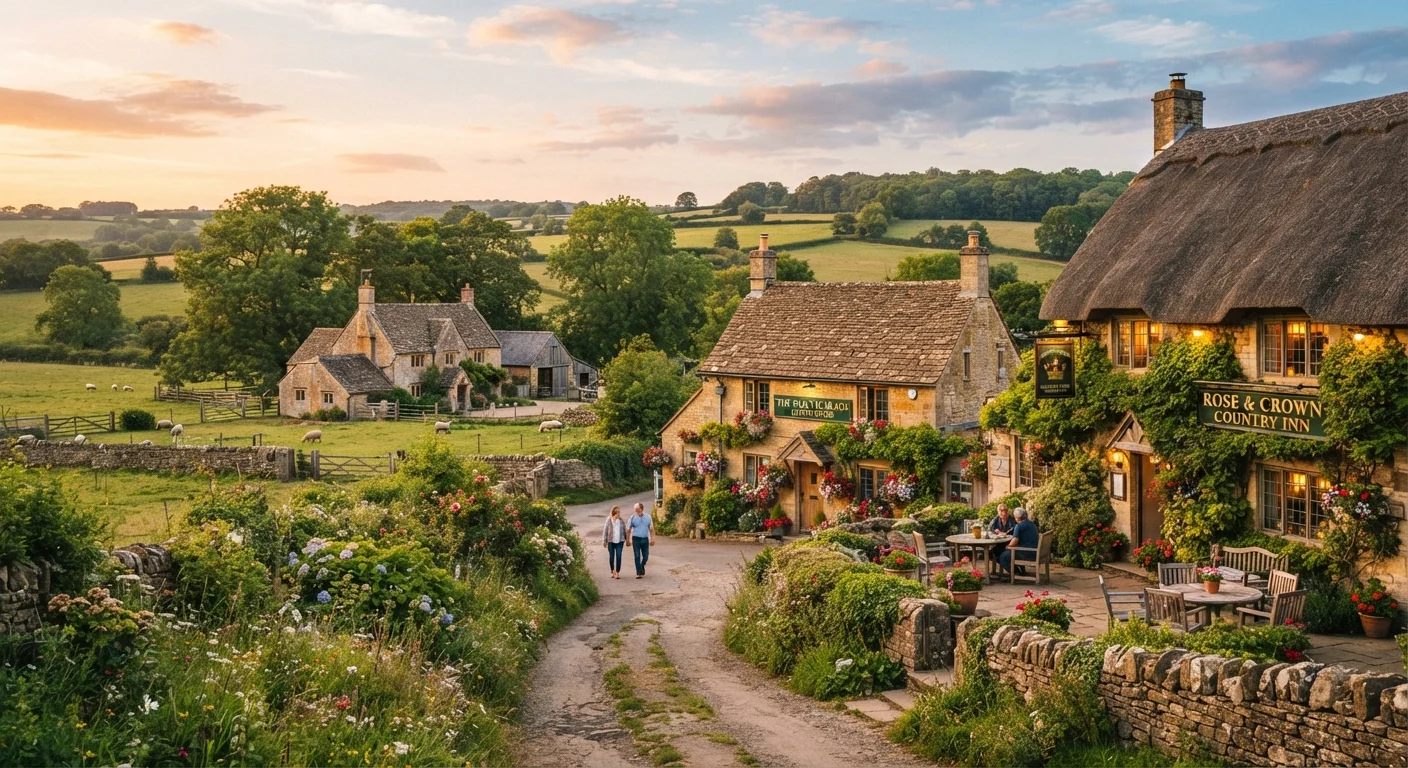
Photo credit: ExploreRoute.net | Travel Made Simple
In this article
Three common types of rural lodging, three very different experiences. Here's how each one is structured and who it suits best.
Why the Labels Matter More Than You Think
Rural lodging exists on a wide spectrum, and the terminology — farmstay, village guesthouse, country inn — gets used loosely in listings and travel writing. That looseness costs travelers. Book a farmstay expecting a peaceful inn experience, and you may find yourself rising at 6 a.m. to the sound of livestock. Expect a guesthouse and arrive at something closer to a homestay with a shared bathroom. The differences aren't merely cosmetic; they reflect fundamentally different ownership models, service levels, and immersion philosophies.
This guide parses each category with precision so you can match the right structure to your travel style. For those also weighing more unconventional rural alternatives, see our field guide to unconventional stays.
| Farmstay defining trait | On working or semi-working agricultural land |
| Village guesthouse defining trait | Embedded within a rural community or settlement |
| Country inn defining trait | Purpose-operated with consistent service and on-site dining |
| Best for farmstays | Slow travelers, families, agritourism enthusiasts |
| Best for village guesthouses | Independent travelers with cultural curiosity |
| Best for country inns | Couples, itinerary travelers, multigenerational groups |
| Typical ownership model | All three are most commonly family or individual-owned |
| Service level range | Village guesthouse (lowest) → Farmstay → Country inn (highest) |
Rural Farmstay: Participation Is the Point
A farmstay is an operational or semi-operational agricultural property that opens some or all of its rooms to paying guests. What defines the category is proximity to working farm life — animals, crops, orchards, or vineyards — and frequently, an expectation that guests engage with that life rather than simply observe it from a distance.
Farmstays range from rustic spare rooms in a working sheep station to carefully curated agritourism properties with private cottages and farm-to-table dinners. What they share is an authentic productive landscape as the backdrop, often with seasonal rhythms that drive the entire experience. Harvest season at a vineyard farmstay is a different proposition from the same property in winter.
Farmstays are best suited to travelers who find meaning in manual proximity — who want to collect eggs, walk orchard rows, or understand how land produces food. Families with curious children, urban escapees, and slow-travel advocates tend to find the format deeply rewarding. Those seeking privacy and frictionless service may find the communal rhythms of a working property less comfortable. Connectivity is often limited; verify in advance.
Agritourism
A form of tourism centered on agricultural settings and activities, such as working farms, vineyards, or orchards. Agritourism properties invite guests to participate in or observe farm operations as part of the stay experience.
Farmstay
A lodging arrangement on an active or semi-active agricultural property where guests stay on-site and often engage with farm activities. The working landscape is integral to the experience.
Village Guesthouse
A small, typically family-run lodging property located within a rural village or community. It emphasizes local hospitality and cultural immersion over standardized amenities.
Country Inn
A purpose-operated rural hospitality property with dedicated staff, consistent room standards, and usually on-site dining. Often housed in a building of historic or architectural character.
Proprietor-Led Property
An accommodation owned and actively managed by an individual or family, rather than operated by a corporate chain. Proprietor-led properties tend to reflect a personal vision and often offer more distinctive, character-driven experiences.
Village Guesthouse: Community as Context
A village guesthouse is typically a small, locally owned property embedded within a rural settlement — a town, village, or hamlet — rather than on agricultural land. The defining characteristic is the social fabric surrounding it. You're lodging inside a community, not adjacent to one.
Guesthouses in this category tend to be modest in scale, often family-run, with limited but personal service. Meals, if offered, usually reflect local home cooking rather than restaurant-caliber dining. The accommodation itself may be simple — a converted spare room, a small annex building — but the value is in the cultural texture that surrounds it: morning markets, local festivals, neighbors who've lived in the same house for generations.
This format suits travelers with genuine cultural curiosity and a tolerance for variability. Village guesthouses often lack standardized amenities and aren't always easy to vet through major booking platforms. But for the experienced traveler willing to verify practical details before booking, they offer access to everyday life that most hotels simply cannot replicate. Think of them as a cultural entry point rather than a comfort guarantee.
Country Inn: Comfort Meets Countryside Character
A country inn occupies a more formalized position on the rural lodging spectrum. Unlike farmstays or guesthouses, country inns are purpose-built or purpose-converted hospitality businesses. They're operating as hotels in all but name — with dedicated staff, consistent room standards, and usually an on-site restaurant or dining room serving both guests and, often, local patrons.
What distinguishes a country inn from a standard rural hotel is character: a historic building, distinctive regional architecture, a proprietor-led vision, or a specific landscape setting. Many occupy converted mills, manor houses, or stagecoach-era buildings, and that heritage is typically central to the identity. Service is attentive but not anonymous; you're unlikely to encounter the corporate uniformity of a chain property.
Country inns suit the broadest range of traveler types — couples on weekend escapes, multigenerational family groups, or anyone who wants a restorative rural experience without sacrificing reliable comfort. They also pair naturally with itinerary-based travel: staying at a country inn while exploring a wine region, national park, or historic trail keeps logistics simple without compromising atmosphere. For a broader look at how accommodation style should match trip purpose, our guide to matching trip type to hotel style is a useful companion read.
3 in 4
Agritourism travelers cite farm engagement as primary motivator
According to general agritourism research trends; travelers seek hands-on agricultural experiences over passive observation.
~60%
Rural lodging properties are independently owned
Independent ownership remains dominant in rural hospitality globally, distinguishing it from urban hotel markets dominated by chains.
2–8 rooms
Typical size of a rural village guesthouse
Small room counts are characteristic of village guesthouses, contributing to the intimate, family-run atmosphere that defines the category.
Choosing Between the Three
The clearest decision framework comes down to two questions: How much do you want to be part of the place? and How much service variability can you comfortably absorb?
- Farmstay: High immersion, low predictability, high engagement. Best for slow travelers and agricultural enthusiasts.
- Village guesthouse: High cultural access, moderate-to-low comfort standards, strong local connection. Best for seasoned independent travelers.
- Country inn: Moderate immersion, dependable comfort, widest appeal. Best for those who want countryside character without roughing it.
It's also worth noting that regional terminology varies — what's called a "guesthouse" in rural Vermont may function more like a country inn, while the same word in rural Southeast Asia implies a very different proposition. Always read property descriptions carefully rather than relying on category labels alone.
Travelers drawn to even more distinctive formats — cave dwellings, floating cabins, treehouses — will find parallel logic applied to terrain-specific stays in our guide to landscape-matched lodging. And for stays that root deeply in cultural tradition, our overview of ryokans, riads, and pousadas extends the comparative lens internationally.
Terminology Varies by Region and Listing Platform
The labels "farmstay," "guesthouse," and "country inn" are not standardized across booking platforms or countries. A listing in rural Ireland labeled "guesthouse" may meet country inn standards; a "farmstay" in Tuscany may function more like a boutique hotel. Read individual property descriptions for operational details — room count, meal service, ownership structure, and proximity to agricultural activity — rather than relying solely on the category name.

Author
Where to Stay Editorial Team
Where to Stay Editorial Team is the collective byline for our editorial team and contributor network. Articles published under this byline or an editorial pen name are researched, written, and reviewed according to our editorial standards for clarity, consistency, and independence before publication.
View all articles →