
Transatlantic Crossings: Understanding the Classic Ocean Voyage Route
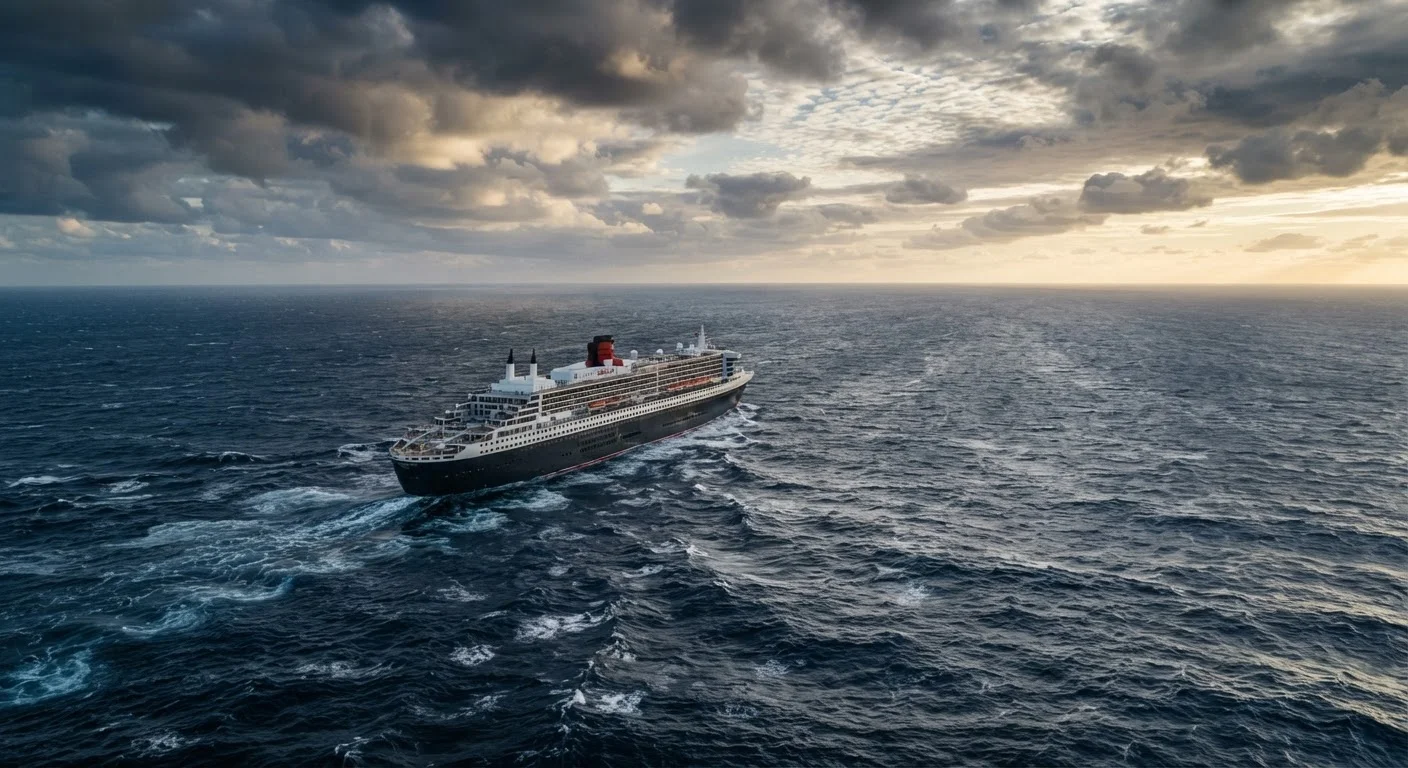
Photo credit: ExploreRoute.net | Travel Made Simple
In this article
Transatlantic crossings are long on sea days and short on ports. Here's what shapes these historic routes and who they actually suit.
Key Takeaways
- Transatlantic crossings prioritize sea days over port calls — typically 5 to 7 consecutive days without landfall.
- Most sailings operate one-way between North America and Europe, requiring a separate return travel plan.
- The route appeals to travelers who genuinely enjoy onboard life, not those driven by shore excursions.
- Crossings often coincide with repositioning schedules in spring and fall, affecting seasonal availability.
- Weather and ocean conditions on the North Atlantic can be more variable than on warm-weather cruise routes.
What Actually Defines the Route
A transatlantic crossing follows one of the oldest commercial sea lanes in the world, connecting the eastern seaboard of North America to the ports of Northwestern Europe. The route is not a scenic coastal cruise — it is a deliberate, open-ocean passage where the horizon in every direction is water for days at a stretch.
That distinction matters enormously when setting expectations. Unlike Mediterranean itineraries that deliver a new port nearly every morning, a transatlantic sailing front-loads its appeal onto the ship itself and the experience of passage. For travelers who have built a cruise identity around shore excursions and city exploration, this is a fundamentally different proposition.
The classic westbound route runs from a British or Northern European port toward New York, following great-circle navigation paths that dip toward higher latitudes. Eastbound departures reverse the course. Neither direction has a categorical advantage — the choice is typically driven by logistics and which end of the trip you want to anchor your travel plans around.
Crossing vs. Coastal Cruise: A Key Distinction
A transatlantic crossing should not be confused with a cruise that happens to include transatlantic ports like Lisbon or the Azores as stops on a longer itinerary. A true crossing is defined by the sustained open-ocean passage — days of uninterrupted sailing — rather than the geographic endpoints alone. Some itineraries marketed as 'transatlantic' include enough port stops to feel quite different from a traditional passage; always review the day-by-day schedule before booking.
The Sea Day Reality
The defining characteristic of a transatlantic crossing is consecutive sea days — often five, six, or seven of them without a port in sight. For the right traveler, this is the entire appeal. For the wrong one, it becomes a source of restlessness that no amount of onboard programming can resolve.
Ships on long ocean passages lean heavily into their enrichment offerings: lectures, culinary demonstrations, language classes, enrichment series tied to the destination. The social rhythm of a sea-day sailing is distinct from a port-intensive itinerary — passengers settle in, routines develop, and the ship becomes a destination unto itself. If that framing resonates, the crossing will likely exceed expectations.
~3,200
Nautical miles in a typical New York to Southampton crossing
The great-circle route between these two major transatlantic ports covers approximately 3,200 nautical miles, taking a large ocean ship roughly 6 to 7 days of continuous sailing.
5–7
Consecutive sea days on most transatlantic sailings
Most transatlantic itineraries feature between five and seven consecutive days without a port call, making onboard programming and ship amenities central to the passenger experience.
It's worth understanding how this voyage style compares structurally to other long-haul options. Repositioning cruises share much of the same DNA — extended sea days, one-way routing, and a more relaxed onboard pace — and many transatlantic sailings are technically repositioning voyages operating under a more evocative name.
Logistics and Planning Considerations
Because most transatlantic crossings operate as one-way sailings, the itinerary creates an asymmetry that requires planning. You arrive in a different country than you departed from, which means a transatlantic cruise is inherently a two-leg trip. That return flight from Southampton or Lisbon needs to be booked, budgeted, and coordinated — and transatlantic airfares can be substantial enough to shift the overall cost calculation significantly.
This is a core reason why the round-trip vs. one-way decision is so relevant to crossing travelers. Some passengers solve the return problem by building a European land itinerary post-cruise, making the crossing the opening leg of a longer trip rather than a standalone vacation. Others fly home from whichever European port the ship arrives at, treating the crossing as a premium mode of transatlantic transit.
Plan Your Return Before You Book
Because most transatlantic crossings are one-way sailings, locking in your return flight from the European arrival port before you commit to the cruise is strongly advisable. Transatlantic airfares fluctuate significantly and can materially affect the total cost of the trip. Building in a few post-cruise nights near the arrival port also provides a buffer against any schedule variability at voyage end.
Seasonality also shapes the experience beyond simple availability. Spring crossings — April and May — tend to encounter more moderate North Atlantic conditions than fall sailings, though neither season offers the calm predictability of a Caribbean winter route. Travelers with significant motion sensitivity should factor this in and verify current sailing conditions with their provider. For a sense of how different the shore-side experience can be when ports are involved, Baltic and Norwegian fjord routes offer a useful contrast — intensely port-focused itineraries at a similar latitude.
Who This Voyage Actually Suits
Transatlantic crossings self-select for a particular traveler profile. Those who find deep satisfaction in onboard life — reading, enrichment programming, long meals, open-deck time watching the sea — typically regard the crossing as one of the more memorable experiences in cruising. The absence of port-day logistics creates a genuine decompression that is hard to replicate on a busy port-intensive itinerary.
The voyage is less well suited to travelers whose cruise satisfaction depends on shore excursions, cultural exploration, and frequent new environments. That's not a criticism — it's a compatibility question. The framework in choosing a cruise itinerary that matches your travel style is a practical starting point for working through exactly this kind of fit assessment before committing to a long ocean passage.
There's also a scale consideration. Transatlantic crossings are almost exclusively the domain of large ocean ships — not river vessels — and the open North Atlantic demands vessels built for deep-ocean passage. The ship itself, its stabilization systems, and its range of onboard amenities matter more on a crossing than on almost any other itinerary type.
Frequently Asked Questions

Author
Cruise Journeys Editorial Team
Cruise Journeys Editorial Team is the collective byline for our editorial team and contributor network. Articles published under this byline or an editorial pen name are researched, written, and reviewed according to our editorial standards for clarity, consistency, and independence before publication.
View all articles →