
The Road Trip Packing List That Actually Fits in Your Car
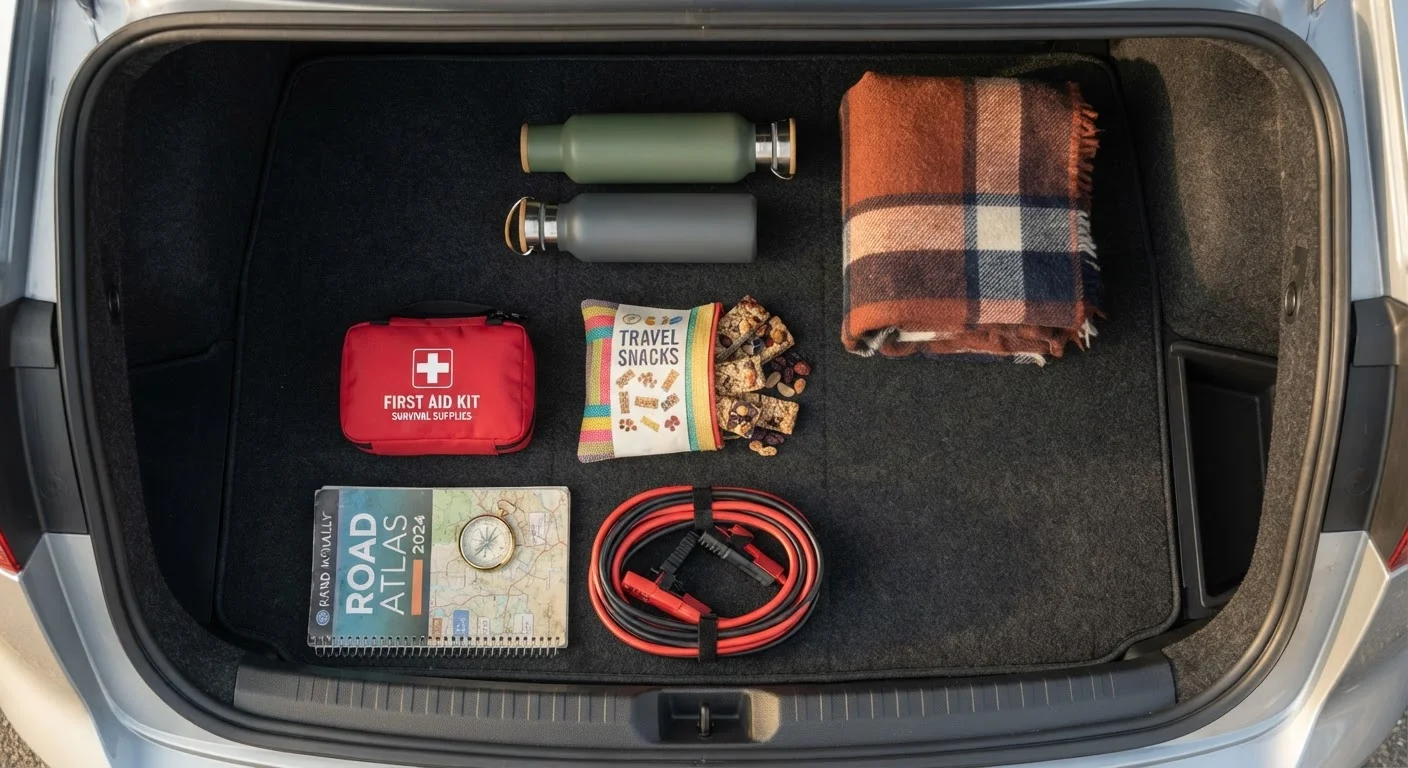
Photo credit: ExploreRoute.net | Travel Made Simple
In this article
A practical checklist covering safety gear, comfort items, navigation tools, and snacks — without overloading your vehicle.
Key Takeaways
- Safety gear — jumper cables, a first-aid kit, and a reflective triangle — should be non-negotiable on every road trip.
- Navigation redundancy matters: a downloaded offline map backs you up when cell service disappears.
- Comfort items like a lumbar pillow and a reusable water bottle make long stretches far more enjoyable.
- Strategic snack packing reduces unnecessary stops and keeps energy levels steady across the miles.
- Packing light means packing smart — every item should earn its space in the car.
Why This Checklist Is Different
Most road trip packing lists read like a dare — stuff everything including the kitchen sink and hope the trunk closes. This one works differently. Every item here has been filtered through a single question: does this earn its space? The goal is a car that's genuinely ready for the road without feeling like a mobile storage unit.
Before you even think about loading up, run through our pre-departure vehicle checklist — because the best packing job in the world can't compensate for a car that isn't road-ready. Once you're confident in the vehicle, turn your attention to what goes inside it.
This list is built around four core categories: safety, navigation, comfort, and food. Use the checklist groups below to work through each one systematically — and resist the urge to add extras until you've confirmed the essentials are covered.
Soft-sided Cooler
Keeps perishable food and drinks at safe temperatures without taking up rigid trunk space.
Portable Jump Starter
Lets you restart a dead battery without needing another vehicle nearby.
Offline Maps App
Provides turn-by-turn navigation even in areas with no cell coverage.
Car Phone Mount
Keeps your navigation visible hands-free so you're not handling your phone while driving.
Collapsible Trash Bin
Contains waste between rest stops and keeps the cabin from becoming a landfill.
Lumbar Support Pillow
Reduces lower back strain during extended time behind the wheel.
Working Through the Checklist
Run through these groups in order. Safety items go in first — they need to be reachable without digging through luggage. Navigation tools live in the front seat or center console. Comfort gear gets distributed across passenger seats. Food and drinks ride in an easily accessible bag or soft cooler, ideally within arm's reach of passengers.
Safety Gear
Navigation & Documents
Comfort & Passenger Needs
Food & Snacks
Don't Let Overpacking Compromise Visibility
A trunk stacked too high or a back seat piled with bags can block your rear view mirror — a genuine safety hazard. Pack bags flat in the trunk where possible, and never stack items above the window line. If you're carrying a roof box or bike rack, verify that rear visibility and brake lights remain unobstructed before you pull out of the driveway.
Traveling with kids? The logistics shift noticeably — our guide to keeping kids comfortable on long drives covers seating arrangements, activity packing, and rest stop strategy that pairs well with this list. And if your route includes remote backroads, pair this checklist with our scenic drive preparation checklist before you leave pavement behind.
For the food category specifically, thinking beyond gas station snacks pays real dividends. Our road trip food guide goes deep on storage, sourcing, and smart meal planning for long drives. And if something unexpected happens on the road, knowing how to handle roadside emergencies is the calm-headed companion to the safety gear you're already packing.
Verify Entry Requirements and Safety Advisories
If your road trip crosses international borders — such as into Canada or Mexico — entry requirements, vehicle documentation rules, and insurance coverage differ significantly from domestic travel. Always verify current border crossing requirements with official government sources before departing. Do not rely on outdated blog posts or fellow travelers for entry rules, as these can change without notice.

Author
Road Trip Culture Editorial Team
Road Trip Culture Editorial Team is the collective byline for our editorial team and contributor network. Articles published under this byline or an editorial pen name are researched, written, and reviewed according to our editorial standards for clarity, consistency, and independence before publication.
View all articles →