
Cabin Humidity, Pressure, and Recirculated Air: What the Numbers Mean for Passengers
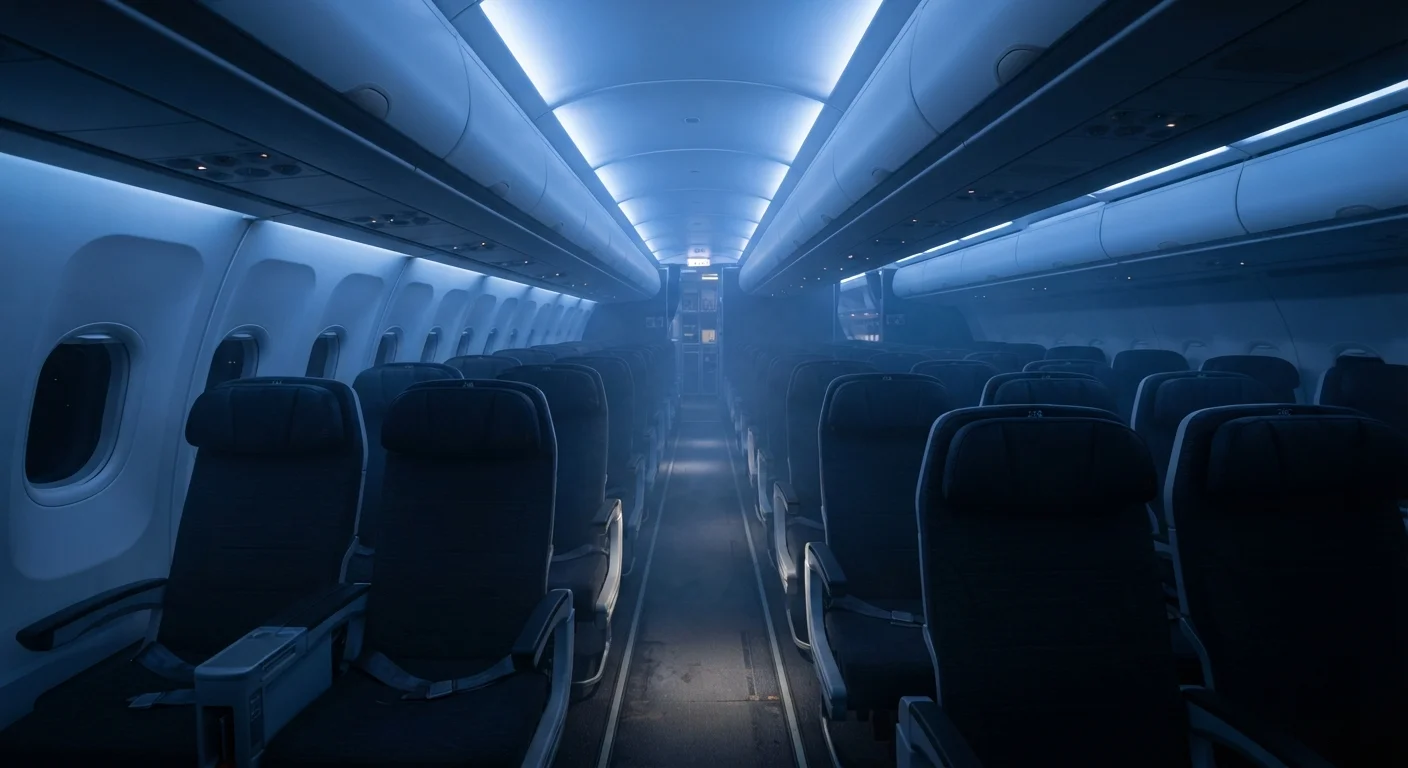
Photo credit: ExploreRoute.net | Travel Made Simple
In this article
A plain-language breakdown of the environmental conditions inside a commercial aircraft cabin and why they matter for how you feel on arrival.
The Three Environmental Variables That Define Your Flight
Every commercial flight subjects passengers to a controlled but artificial environment. Three measurable variables shape how your body responds: cabin altitude pressure, relative humidity, and air recirculation rate. Understanding what the actual numbers mean — and why engineers set them where they do — gives you a realistic baseline for managing how you feel from takeoff to landing.
For a deeper look at the physiological effects these conditions trigger, see why your body feels so different at 35,000 feet. This article focuses on the environmental data itself.
Cabin Pressure: Altitude Equivalent and What It Does
Aircraft cruise at altitudes between 31,000 and 43,000 feet, where outside air pressure is far too low to sustain consciousness. The fuselage is pressurized to maintain a survivable interior, but not to sea-level pressure. Federal Aviation Administration (FAA) regulations require U.S.-certificated transport aircraft to maintain a cabin altitude no higher than 8,000 feet under normal operating conditions.
In practice, most wide-body jets maintain cabins equivalent to roughly 6,000–8,000 feet of altitude. At 8,000 feet, blood oxygen saturation in healthy adults typically drops from the sea-level norm of roughly 98–99% to approximately 93–95%. This mild hypoxia is tolerable for most people but can amplify fatigue, impair fine cognitive tasks, and worsen symptoms in passengers with pre-existing cardiorespiratory conditions.
Some newer aircraft designs — notably composite-fuselage widebodies — allow structural tolerances that permit lower cabin altitudes (closer to 6,000 feet) without significant weight or fuel penalty, a modest but measurable passenger comfort improvement. For comprehensive context on how this connects to your overall in-flight experience, see the complete in-flight comfort overview.
8,000 ft
FAA maximum permitted cabin altitude
U.S. regulations cap normal operating cabin altitude at this equivalent elevation to protect passenger wellbeing.
~93–95%
Typical blood oxygen saturation at cabin altitude
Healthy adults at an 8,000-foot equivalent altitude commonly experience this moderate drop from the sea-level norm of 98–99%.
10%–20%
Cabin relative humidity on long-haul flights
This range is drier than most desert climates, which average around 25% relative humidity.
Relative Humidity: Why the Cabin Feels So Dry
Cabin relative humidity is typically between 10% and 20% on long-haul flights — significantly drier than most desert environments, which average around 25%. The cause is structural: outside air at cruise altitude contains virtually no moisture. When it is compressed and conditioned for the cabin, the residual moisture content remains extremely low.
At these humidity levels, the mucous membranes lining the nose, throat, and eyes lose moisture faster than normal, reducing their effectiveness as a barrier to irritants and pathogens. Skin and contact-lens wearers often notice discomfort within the first hour. Staying ahead of this effect through deliberate hydration is the primary practical mitigation — the in-flight hydration guide covers the mechanics in detail.
Newer Aircraft and Humidity Improvements
Some newer composite-fuselage aircraft designs incorporate active humidification systems that can raise cabin humidity slightly above the 10–20% baseline common on older aluminum-frame jets. The structural tolerances of composite materials allow for this without the corrosion risk that higher humidity poses in metal airframes. Passengers particularly sensitive to dry-air effects may notice a modest difference on routes operated by these newer aircraft types, though the improvement is incremental rather than transformative.
Recirculated Air: Filtration Facts and What They Mean
A persistent traveler concern is whether recirculated cabin air increases disease transmission risk. The mechanics are worth understanding precisely. Modern commercial jets draw fresh outside air from engine bleed systems and mix it with recirculated cabin air in roughly a 50/50 ratio. The recirculated portion passes through High-Efficiency Particulate Air (HEPA) filters, which capture particles — including most bacteria and viruses — at an efficiency of 99.97% for particles 0.3 microns and larger.
The combined air supply is typically refreshed at a rate that delivers 15–20 cubic feet of air per minute per passenger, a ventilation rate comparable to or exceeding many office buildings. Airflow runs in lateral zones from overhead to floor-level outlets rather than front-to-back, which limits the spread of airborne particles along the cabin length. However, proximity remains a factor: passengers seated within two rows of an infectious individual face a higher exposure risk regardless of filtration quality.
To round out your understanding of the sensory environment on long-haul routes, noise on long-haul flights addresses the acoustic dimension that compounds fatigue alongside these environmental stressors.
Cabin altitude
The equivalent elevation whose atmospheric pressure matches the pressurized environment inside the aircraft cabin. A cabin altitude of 8,000 feet means the interior air pressure equals what you would experience standing at 8,000 feet above sea level, not at the aircraft's actual cruising altitude.
Relative humidity (RH)
The amount of water vapor in the air expressed as a percentage of the maximum it could hold at that temperature. At 15% RH, the air holds only 15% of its potential moisture — conditions that accelerate drying of skin and mucous membranes.
HEPA filter
High-Efficiency Particulate Air filter — a mechanical filter standard requiring capture of at least 99.97% of airborne particles 0.3 microns or larger. Aircraft use these filters on the recirculated portion of cabin air.
Hypoxia
A condition in which the body or a region of the body is deprived of adequate oxygen supply. Mild hypoxia at cabin altitude pressures is generally tolerable for healthy adults but can cause fatigue, headache, and impaired cognitive performance.
Bleed air
Hot, compressed air tapped from an aircraft engine's compressor stages and used to pressurize and condition the cabin. Bleed air is the primary source of fresh outside air in most commercial jets.
Ventilation rate
The volume of fresh or filtered air supplied to an occupied space per unit of time, typically expressed in cubic feet per minute (CFM) per person. Higher ventilation rates generally reduce the concentration of airborne contaminants.
Applying the Numbers Before You Board
Knowing these figures enables specific, practical preparation rather than vague advice. Low humidity argues for pre-flight hydration and avoiding alcohol and caffeine in excess — both accelerate fluid loss. Reduced cabin pressure suggests that passengers with conditions affecting oxygen delivery should consult a physician before flying; this is general information and not medical guidance, so confirm any personal health decisions with a qualified clinician. The HEPA filtration system provides meaningful protection, though it does not eliminate transmission risk entirely.
For a structured checklist that translates these environmental realities into pre-flight actions, the in-flight comfort checklist consolidates what to pack, wear, and do before boarding.
This article is for general informational purposes only and does not constitute medical advice. Passengers with health conditions should consult a qualified healthcare professional before flying.

Author
Smart Air Travel Editorial Team
Smart Air Travel Editorial Team is the collective byline for our editorial team and contributor network. Articles published under this byline or an editorial pen name are researched, written, and reviewed according to our editorial standards for clarity, consistency, and independence before publication.
View all articles →