
Noise on Long-Haul Flights: Sources, Effects, and Practical Ways to Manage It
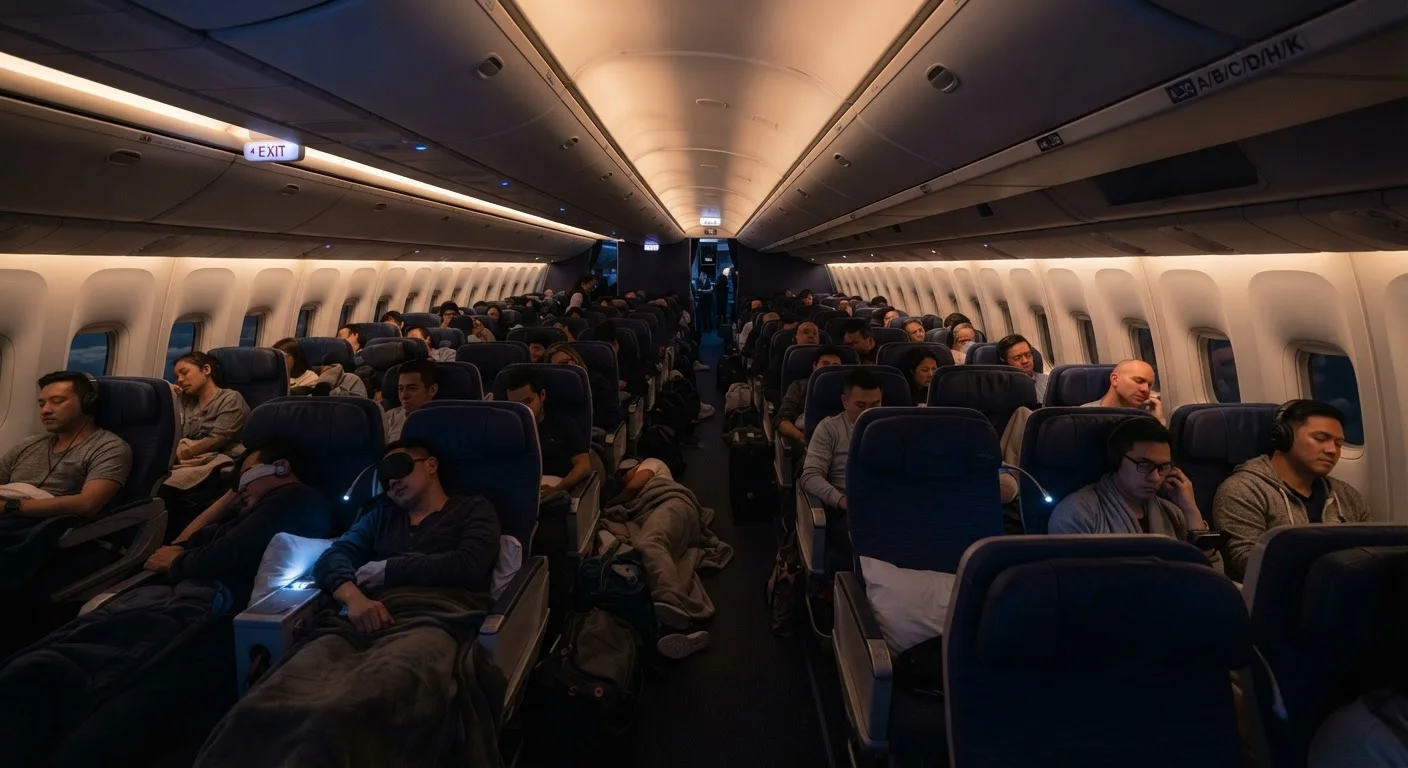
Photo credit: ExploreRoute.net | Travel Made Simple
In this article
Engine roar, cabin announcements, and talkative neighbours add up. A clear look at aircraft noise sources and realistic strategies for reducing their impact.
Key Takeaways
- Cabin noise on long-haul flights commonly ranges from 75–85 dB during cruise — comparable to a busy highway.
- Engine turbines, aerodynamic airflow, and HVAC systems are the three primary structural noise sources.
- Seats positioned over the wing or ahead of the engines generally experience lower noise levels.
- Sustained noise exposure contributes to fatigue, disrupted sleep, and reduced cognitive performance.
- Passive ear protection and active noise-cancelling technology address different parts of the noise spectrum.
- Simple behavioural strategies — like timing sleep windows and managing audio volume — complement any hardware solution.
Where Cabin Noise Actually Comes From
Understanding in-flight noise begins with identifying its sources, because each type responds differently to mitigation strategies.
Engine and propulsion noise is the most powerful contributor. High-bypass turbofan engines generate a broad-spectrum roar that transmits through the fuselage as both airborne sound and structural vibration. The effect is most pronounced in seats aft of the wing, where exhaust noise propagates rearward.
Aerodynamic noise is generated by turbulent airflow over the fuselage, wings, and control surfaces. At cruising speeds above 500 mph, this creates a persistent broadband hiss that is difficult to fully isolate. It is one reason that window-adjacent seats — where fuselage vibration is more directly felt — can seem noisier than aisle seats.
HVAC and mechanical systems add a continuous layer of mid-frequency noise. The air conditioning and pressurisation systems must run constantly, producing a steady hum that seldom reaches awareness consciously but contributes to overall cognitive load over a long journey.
Social and operational noise — conversations, children, galley equipment, PA announcements — is intermittent but often the most perceptually disruptive because it is spectrally similar to speech, making it harder for the auditory system to filter out.
Noise Interacts with Other Cabin Stressors
Cabin noise does not act in isolation. Reduced humidity, lower oxygen partial pressure, and the psychological effect of confinement all interact with noise-related fatigue. Managing multiple stressors together — rather than addressing noise alone — produces more noticeable improvements in how you feel on arrival. See our related guide on cabin environmental conditions for the full picture.
For a broader understanding of how the cabin environment affects how you feel on arrival, see our companion article on cabin humidity, pressure, and recirculated air. Noise is one of several interacting environmental stressors in flight.
How Sustained Noise Affects Passengers
Noise is not merely an inconvenience — at the levels found in long-haul cabins, it produces measurable physiological and cognitive effects over the course of a multi-hour flight.
75–85 dB
Typical cruise-phase cabin noise level
Published aviation and occupational health studies consistently place long-haul cruise cabin noise in this range, comparable to sustained heavy road traffic.
~33 dB
Noise reduction from properly fitted foam earplugs
Standard foam earplugs rated at NRR 33 can reduce perceived noise by up to 33 decibels when correctly inserted, covering the full audible spectrum.
~40 dB
Noise threshold above which sleep is disrupted
Environmental noise research, including WHO night noise guidelines, indicates that sustained ambient noise above approximately 40 dB can meaningfully fragment sleep architecture.
Sleep fragmentation is the most commonly cited impact. The auditory system remains partially active during sleep, and ambient noise at cabin levels consistently produces lighter, more fragmented sleep. This compounds jet-lag effects on overnight flights, which is significant given that sleep is the primary recovery mechanism available during long hauls.
Cognitive fatigue accumulates even when passengers are awake and attempting to work or read. The brain expends continuous low-level effort filtering irrelevant sound, reducing available cognitive resources. If you plan to stay focused and productive in the air, managing your acoustic environment is as important as managing screen time and seating posture.
Stress hormone elevation is a documented response to sustained noise exposure. While a single flight is unlikely to cause lasting physiological harm, the cumulative effect across a long journey — or a heavy travel schedule — contributes to the drained feeling many frequent flyers associate with long-haul travel rather than attributing it solely to dehydration or immobility.
Practical Strategies for Reducing Noise Exposure
No single solution eliminates cabin noise entirely, but a layered approach addresses the different frequency ranges and source types effectively.
Seat Selection
Choose seats in the forward cabin section when possible. Seats ahead of the wing are meaningfully quieter than those over or behind the engines. Avoid seats adjacent to galleys on overnight flights — crew activity, equipment noise, and PA proximity outweigh the convenience of quick aisle access. Long-haul preparation guides often note seat selection as one of the highest-leverage decisions available before boarding.
Passive Ear Protection
Foam earplugs, properly inserted, reduce overall sound levels by 25–33 dB across most of the audible spectrum. They are inexpensive, lightweight, and particularly effective against the broadband engine drone that ANC headphones handle less efficiently at higher frequencies. Many experienced long-haul travellers carry both foam plugs and headphones for different phases of the flight.
Active Noise-Cancelling Headphones
ANC technology uses microphones to sample ambient sound and generate an inverse wave that cancels low-frequency steady-state noise — the primary engine drone. The result is a dramatic reduction in perceived engine roar. For a grounded assessment of where these devices genuinely perform and where they fall short, the article on noise-cancelling headphones and other in-flight comfort accessories is worth reading before your next trip.
Audio Masking and Volume Discipline
Playing audio — music, podcasts, or ambient soundscapes — at a moderate level through headphones can mask irregular social noise effectively. Critically, volume discipline matters: listening at high levels to compensate for ambient noise simply trades one noise source for a more damaging one. Aim for a level at which you can still hear a loud announcement.
Layer Your Noise Protection Strategies
No single tool addresses the full noise spectrum inside a long-haul cabin. Combine seat selection (forward of the wing), foam earplugs for broadband attenuation, and ANC headphones for engine drone during sleep or focus periods. Adding an audio mask at moderate volume handles intermittent social noise that neither passive nor active protection fully eliminates.
Timing and Behavioural Strategies
Coordinate sleep windows with the quieter phases of the flight — typically mid-cruise, when galley activity subsides and the cabin settles. Combine ear protection with an eye mask and, if relevant to your situation and approved by your doctor, any sleep support routines you use at home. The in-flight movement and circulation routine also complements noise management: physical movement helps reset alertness levels when sustained noise has caused fatigue to build unevenly.
Frequently Asked Questions

Author
Smart Air Travel Editorial Team
Smart Air Travel Editorial Team is the collective byline for our editorial team and contributor network. Articles published under this byline or an editorial pen name are researched, written, and reviewed according to our editorial standards for clarity, consistency, and independence before publication.
View all articles →