
Overwater Bungalows vs. Floating Hotels: Two Very Different Ways to Sleep on Water
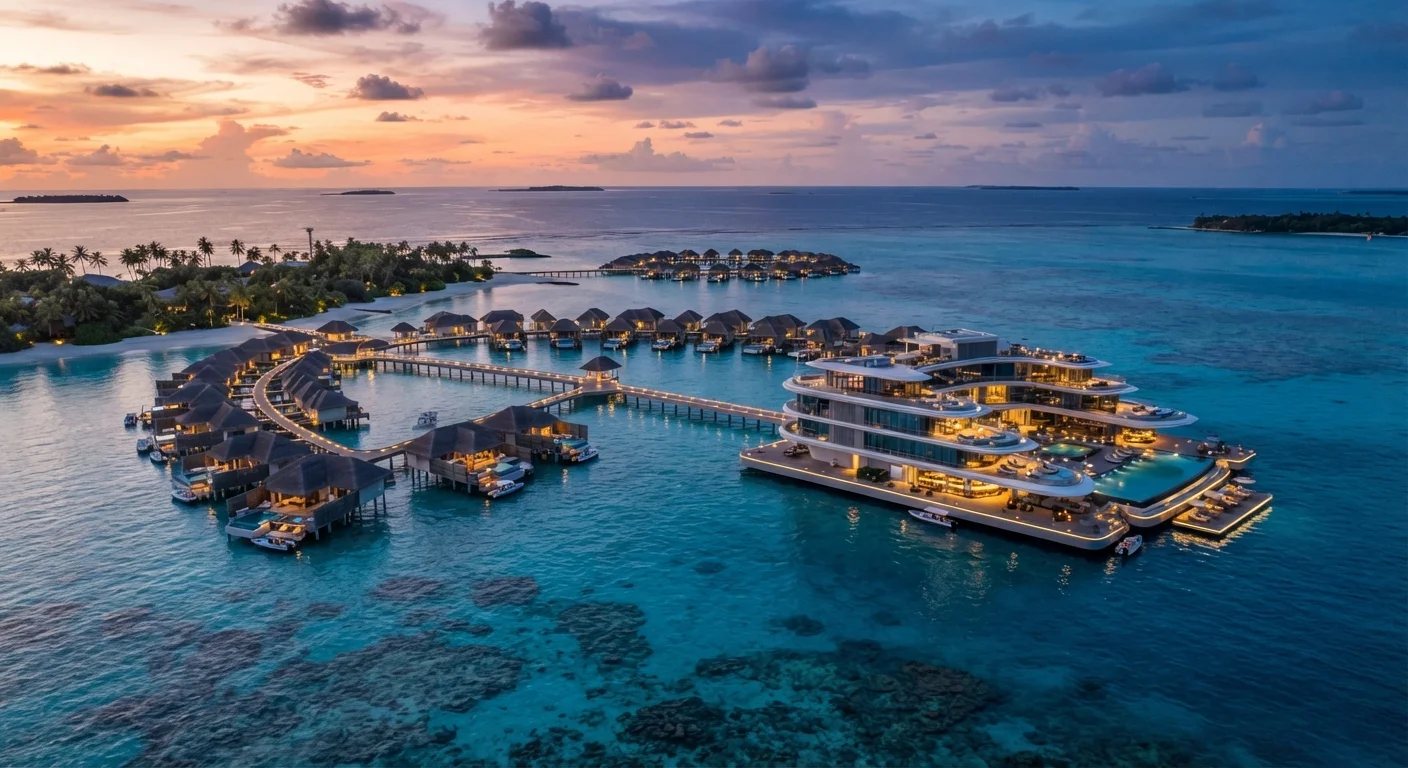
Photo credit: ExploreRoute.net | Travel Made Simple
In this article
Overwater bungalows and floating hotels both put you on the water, but the experience, setting, and logistics differ considerably.
Key Takeaways
- Overwater bungalows are fixed structures built over tropical lagoons, while floating hotels can be moored or mobile on diverse waterways.
- The bungalow experience centers on direct water access below your room; floating hotels vary widely in design and setting.
- Floating hotels appear in far more geographic contexts, including cities, fjords, and rivers.
- Motion sensitivity matters more with floating hotels, especially those moored on tidal or river waterways.
- Both formats carry unique logistical considerations around access, weather, and environmental impact.
What Separates These Two Water-Based Stay Categories
Both formats put you on — or directly above — water, but the structural and experiential differences are substantial. An overwater bungalow is a permanent or semi-permanent room or villa built on pilings driven into a lagoon bed. The structure doesn't move. Guests have direct water access beneath them, typically through a ladder or steps from a private deck, and the setting is almost always a warm-water tropical environment, most famously in French Polynesia, the Maldives, and parts of Southeast Asia.
A floating hotel, by contrast, is a structure — or a converted vessel — that floats on the water's surface rather than being elevated above it. Some are permanently moored in a single location; others are purpose-built pontoon structures; a few are genuinely mobile. They appear on rivers, harbors, fjords, and lakes, well beyond the tropical latitudes that define the bungalow category. For a broader look at how these formats fit into the wider landscape of unconventional stays, see our field guide to unconventional stays.
| Criterion | Overwater Bungalow | Floating Hotel |
|---|---|---|
| Structure type | Fixed pilings over lagoon | Floating hull or pontoon |
| Movement | None — fully stationary | Possible rocking on tidal/river water |
| Geographic range | Primarily tropical Indo-Pacific, Indian Ocean | Global — cities, fjords, rivers, lakes |
| Water access | Direct — steps or ladder below deck | Varies by property and mooring |
| Typical access journey | Often requires ferry or seaplane | Often walkable from urban centers |
| Design consistency | Broadly similar across properties | Highly variable by vessel and operator |
| Environmental considerations | Reef and lagoon impact from pilings | Depends on waterway and waste systems |
| Seasonal limitations | Cyclone and storm seasons | Tidal, ice, or weather-dependent by region |
The Overwater Bungalow Experience: Intimacy with a Specific Ecosystem
The appeal of an overwater bungalow is deeply tied to its relationship with the water beneath it. Glass floor panels, open-air decks over the lagoon, and the sound of water lapping at the stilts all create a sensory environment that's difficult to replicate on land. The stillness is a feature — these structures don't move, and the lagoon below is typically sheltered.
However, the category comes with real constraints. Geographic reach is limited; you're predominantly choosing between destinations in the Indo-Pacific and Indian Ocean regions. Seasonal weather patterns — tropical storms and cyclone seasons — dictate when these resorts are practical to visit. Environmental impact is also a growing conversation: reef-anchored pilings can affect marine ecosystems, and responsible travelers are right to research how individual properties approach sustainability before booking.
90+
Countries with floating hotel options
Floating hotels and moored accommodation have expanded well beyond niche markets, appearing across multiple continents and climate zones.
~1970s
Decade overwater bungalows emerged commercially
French Polynesia is widely credited with popularizing the overwater bungalow format for tourism, with the concept spreading to the Maldives and beyond in subsequent decades.
Logistically, overwater bungalows often require boat transfers from the nearest airport or main island, adding both time and cost to the journey. For a fuller look at what sets this format apart from other experiential hotel categories, our editorial on experiential hotel formats covers the essentials.
The Floating Hotel Experience: Broader Geography, More Variable Quality
Floating hotels trade the iconic tropical framing for geographic flexibility. You'll find examples moored in Scandinavian harbors, drifting along Southeast Asian rivers, anchored in urban waterfronts, and operating seasonally on alpine lakes. The structural variety is significant — some are converted houseboats or barges with genuine character; others are purpose-built pontoon structures with hotel-standard amenities; a small number are mobile vessels that relocate between seasons.
The tradeoff is consistency. Unlike overwater bungalows — which share a broadly similar design logic — floating hotels vary enormously in quality, comfort, and stability. Motion is a real factor on tidal waters or open harbors, which matters if you're sensitive to rocking. Amenities also vary: some floating hotels are indistinguishable from a well-appointed land-based boutique property, while others lean into their rustic, nautical character at the expense of modern comforts.
That geographic range is also where floating hotels win outright for non-tropical travelers. A waterfront stay in a city versus a nature setting represents very different propositions, and floating hotels are one of the few accommodation formats that can genuinely deliver both. The full tradeoff picture for water-based stays — including houseboats — is explored in our deep dive on staying on water.
Practical Considerations Before You Commit
Travelers weighing one format against the other should think beyond the aesthetic. Access is a major variable: overwater bungalows often sit at the end of a multi-leg journey involving island ferries or seaplanes. Floating hotels, particularly those in cities or on navigable rivers, are frequently far easier to reach — sometimes a short walk from a city center pier.
Weather sensitivity affects both, but differently. Overwater bungalows close or restrict access during cyclone or storm seasons. Floating hotels on tidal rivers or open harbors may experience uncomfortable motion during rough weather even when technically open. Always verify seasonal conditions with individual properties before committing.
For travelers interested in water travel more broadly, it's worth noting how the rhythm of a fixed water-based stay differs from a moving one — our editorial on ocean vs. river cruise itineraries offers a useful contrast. Both overwater bungalows and floating hotels belong to the wider world of distinct hotel styles worth understanding before you travel.
Sustainability and Environmental Impact
Both formats carry environmental considerations worth researching before you book. Overwater bungalows built on pilings can disrupt reef ecosystems and seabed habitats; responsible properties invest in reef monitoring and use designs that minimize damage. Floating hotels vary in how they handle wastewater, fuel use, and disturbance to local waterways. Look for properties that publish their environmental policies and hold recognized sustainability certifications — and verify claims rather than relying solely on marketing language.

Author
Where to Stay Editorial Team
Where to Stay Editorial Team is the collective byline for our editorial team and contributor network. Articles published under this byline or an editorial pen name are researched, written, and reviewed according to our editorial standards for clarity, consistency, and independence before publication.
View all articles →