
Guided Food Tours vs. Self-Directed Eating: Which Approach Suits Your Style?
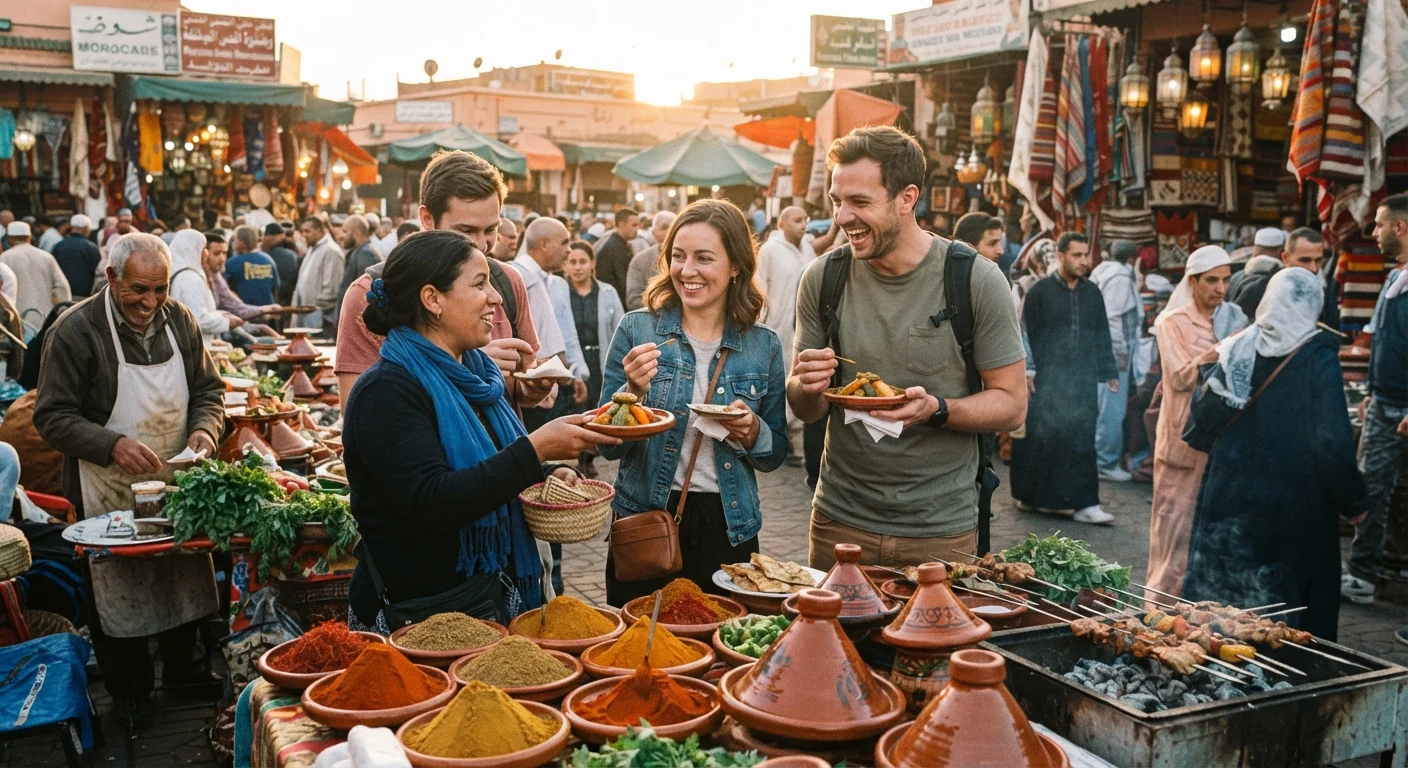
Photo credit: ExploreRoute.net | Travel Made Simple
In this article
Both guided food tours and independent exploration have distinct strengths. Compare the two approaches to find your ideal culinary travel method.
Key Takeaways
- Guided food tours offer curated access, local expertise, and cultural context that independent research rarely replicates.
- Self-directed eating rewards curiosity and flexibility but requires research investment and comfort with ambiguity.
- Your travel style, language confidence, and appetite for spontaneity are the most reliable factors in deciding between the two.
- Hybrid approaches — combining a guided tour early in a trip with independent exploration later — often yield the richest results.
- Neither method is inherently superior; the best choice aligns with your pace, goals, and destination.
What Each Approach Actually Delivers
Guided food tours are structured, typically two-to-three-hour experiences led by a local expert who moves a small group through a curated sequence of tastings. The best ones weave history, technique, and neighborhood context into each stop — you're not just eating, you're being oriented. For travelers new to a destination's food culture, this compression of knowledge is genuinely valuable.
Self-directed eating looks different for everyone. At its most intentional, it involves serious pre-trip research: consulting food journalists, local blogs, community forums, and regional cookbooks before arriving. At its most spontaneous, it means following your nose through a market and trusting the queue. Both modes are valid, but they require fundamentally different mindsets.
The choice isn't purely logistical — it reflects how you engage with travel itself. For a parallel look at how this dynamic plays out beyond the plate, the trade-offs between organized shore excursions and solo port exploration follow a strikingly similar pattern.
| Guided Food Tour | Self-Directed Eating | |
|---|---|---|
| Local access & insider knowledge | High — guide opens doors unavailable independently | Variable — depends on depth of pre-trip research |
| Flexibility & spontaneity | Low — fixed stops and schedule | High — eat what, when, and where you want |
| Language barrier mitigation | Strong — guide translates and advocates | Challenging — requires preparation or translation tools |
| Cultural context provided | Rich — embedded in each stop | Self-sourced — requires research investment |
| Cost structure | Fixed tour fee; tastings typically included | Variable; scales with choices and appetite |
| Best for dietary needs | Easier to manage with guide assistance | Requires advance research and communication skills |
| Depth of immersion over time | Concentrated but time-limited | Potentially deep with sustained effort |
The Real Strengths of Guided Tours
Access is the most underrated advantage of a guided food tour. A knowledgeable guide can walk you into a family-run operation that has no web presence, translate a menu with regional specificity, or explain why a particular preparation technique signals quality in that culture. These aren't details a travel app surfaces reliably.
Guided tours also remove decision fatigue — particularly useful when you've just arrived and haven't yet calibrated to a new food environment. Dietary restrictions and allergies are easier to manage when someone fluent in the local language is advocating on your behalf at each stop.
Use a Guided Tour as Your Orientation Layer
If you're arriving in a destination with a food culture that's genuinely unfamiliar — different scripts, unfamiliar ingredients, regional dishes with no English documentation — a guided tour in the first 24 to 48 hours pays dividends for the rest of your stay. You'll leave with neighborhood knowledge, vendor instincts, and a calibrated sense of what quality looks like locally. Independent exploration becomes sharper and more intentional as a result.
The social dimension matters too. Small-group tours routinely connect travelers with fellow food-curious people, and the shared experience of tasting something unexpected together has real value. If your interest runs deeper, hands-on cooking classes abroad extend this guided-learning model into actual technique.
The Real Strengths of Going It Alone
Independent eating rewards preparation. Travelers who invest in destination-specific food research before departure — reading regional food writers, identifying neighborhood markets, understanding seasonal rhythms — consistently report more resonant experiences than those who rely on generic tourist resources.
The freedom to linger is significant. When you discover a vendor whose fermented chili paste deserves twenty minutes of your attention, no group schedule pulls you away. Self-directed eating also scales cleanly with budget and pace: you eat when hungry, not when the tour itinerary dictates.
For travelers who want to build a whole trip around this approach, a food-focused itinerary built from destination research through table reservations offers a practical framework. And for those just beginning to explore culinary travel, a guide for first-time food-led travelers covers the foundational decisions well.
One underappreciated benefit: eating independently inside everyday markets and neighborhood spots — rather than at tourism-oriented tastings — offers a more unfiltered window into daily life. How food festivals compare to ordinary daily eating explores this distinction in depth.
How to Decide — and When to Combine Both
Three questions clarify the decision quickly: How confident are you navigating unfamiliar food environments without translation help? How much pre-trip research have you done? And how important is flexibility versus structure to your travel satisfaction?
A practical middle path used by many experienced culinary travelers: book a guided tour within the first day or two of arrival to orient yourself, then use that knowledge base to explore independently for the rest of the trip. The tour calibrates your instincts; the independent days put them to use.
72%
Travelers who research food before visiting
According to American Express Travel research, a significant majority of travelers identify food and dining as a primary trip motivator, underscoring how central culinary experience has become to travel planning.
2–3 hrs
Typical guided food tour duration
Most urban food tours run two to three hours and cover four to eight tasting stops, offering a concentrated orientation to a neighborhood's culinary identity.
Destination complexity matters too. In cities where English menus are rare and regional specialties require local orientation — parts of rural Japan, the Oaxacan highlands, or the medinas of Morocco — guided access accelerates genuine understanding in ways that solo research often can't match. In cities with robust food media ecosystems and multilingual environments, independent eating is considerably more approachable from the start.
Ultimately, the same honest trade-off framework that applies to solo adventure travel versus guided expeditions applies here: both approaches carry real demands, and the right one is the one that fits how you actually travel — not how you imagine you might.

Author
Specialty Travel Editorial Team
Specialty Travel Editorial Team is the collective byline for our editorial team and contributor network. Articles published under this byline or an editorial pen name are researched, written, and reviewed according to our editorial standards for clarity, consistency, and independence before publication.
View all articles →